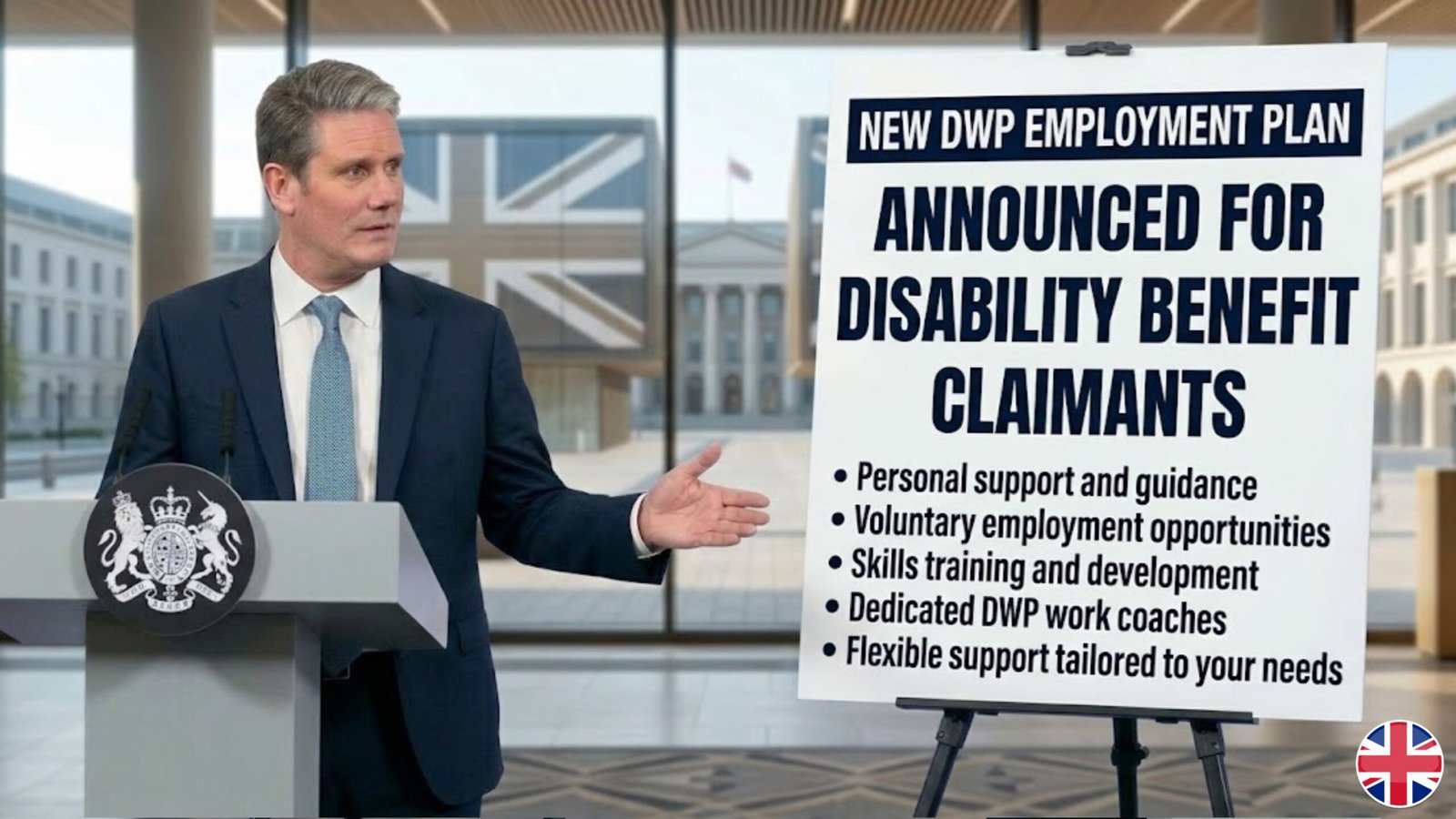
The Department for Work and Pensions (DWP) has recently unveiled a comprehensive new employment plan aimed at transforming how disability benefit claimants interact with the labor market. For millions of people across the UK currently receiving Personal Independence Payment (PIP), Universal Credit health elements, or Employment and Support Allowance (ESA), these changes represent a significant shift in government policy.
The core of this new initiative is a move away from the traditional “all or nothing” approach to work capability. Instead, the DWP is introducing a framework designed to provide more tailored support while simultaneously adjusting the financial incentives within the benefits system. If you are a claimant or a carer, understanding the nuances of this plan is essential to navigating the coming months and ensuring you receive the full support to which you are entitled.
The Shift Toward Work-Related Support
Historically, the UK benefits system has often been criticized for creating a “cliff edge,” where claimants fear that taking any steps toward employment could result in the immediate loss of their financial lifeline. The new DWP plan seeks to address this by integrating more voluntary work support into the claims process without the immediate threat of a benefit cut.
UK Banks Officially Confirm New Withdrawal Limits for Over-60s
Central to this is the introduction of the “Work-Well” pilot schemes and expanded access to “Individual Placement and Support” (IPS). These programs are designed to provide specialized coaching that focuses on what a person can do, rather than simply documenting their limitations. For claimants, this means the conversation with a work coach will increasingly center on reasonable adjustments and flexible working opportunities that could accommodate specific health conditions.
Major Changes to Universal Credit Health Elements
One of the most talked-about aspects of the new plan involves the restructuring of Universal Credit payments for those with health conditions. Starting from April 6, 2026, the DWP is implementing a “rebalancing” of rates. This is a crucial detail for anyone currently in the “Limited Capability for Work and Work-Related Activity” (LCWRA) group.
UK Banks Introduce New Safeguards for Over-67 Cash Withdrawals
Under the new regulations, the standard allowance for Universal Credit is being increased above inflation, but the additional “health element” for new claimants is being reduced. For those who qualify after the April 2026 cutoff, the LCWRA payment will drop from approximately £432 per month to £217 per month for most new recipients. The government argues that this reduces the “incentive” for people to be categorized as unable to work, but it has raised concerns among advocacy groups about the potential for a two-tiered system between existing and new claimants.
Protecting Existing Claimants and Severe Conditions
A key concern for many is whether their current payments will be slashed. The DWP has clarified that “transitional protection” will be in place for those already receiving disability-related elements of Universal Credit before the April 2026 changes. If you are already in the LCWRA group, your current rate should be protected and continue to rise with inflation (CPI).
Furthermore, the new plan includes a “severe conditions” category. Claimants who have the most profound, life-long disabilities or terminal illnesses will be exempt from the lower payment rates and will not be expected to engage in work-related activity. This is intended to ensure that the most vulnerable people in society are not impacted by the drive to increase employment numbers.
The New Role of PIP Assessments
In a major structural change, the DWP is moving toward a system where the Personal Independence Payment (PIP) assessment becomes the primary gateway for health-related support across multiple benefits. This is part of a broader plan to phase out the separate “Work Capability Assessment” (WCA) over the coming years.
The logic behind this move is to simplify the process. Instead of attending two different medical assessments for PIP and Universal Credit, claimants will eventually have a single point of evaluation. However, this has led to questions about how the criteria will change. The DWP is looking to tighten the “descriptors” for PIP, particularly focusing on how many points are required in specific daily living categories. If you are currently applying for PIP, it is more important than ever to be detailed and accurate in how your condition affects your everyday life.
Expanding the Work-Well Program
The DWP is also rolling out the “Work-Well” service across more regions in the UK. This is a joint initiative between the DWP and the NHS, aimed at providing early intervention for people who are at risk of falling out of work due to health issues.
For claimants, this service provides access to a “Health and Work Coach” who can coordinate with GPs and employers. The goal is to provide a “holistic” support package that includes physical therapy, mental health support, and workplace mediation. By intervening early, the DWP hopes to reduce the number of people who end up on long-term disability benefits in the first place.
The Earnings Threshold and Carer’s Allowance
For those who care for disability benefit claimants, the new plan also brings updates to Carer’s Allowance. As of April 2026, the weekly rate is increasing to £86.45. More importantly, the “Earnings Limit”—the amount a carer can earn from a part-time job without losing their allowance—has been increased to £204 per week.
This change is designed to allow carers to maintain a connection to the workforce without the fear of a “cliff edge” where earning an extra pound results in the loss of their entire benefit. It aligns with the government’s broader strategy of encouraging “mini-jobs” and flexible working arrangements for those with significant caregiving responsibilities.
Addressing the Mental Health Crisis
A significant portion of the DWP’s new employment plan is dedicated to addressing the rise in mental health-related claims. The government has noted that a large percentage of new disability claimants are citing anxiety, depression, or other neurodivergent conditions as their primary barrier to work.
The new plan includes increased funding for “Talking Therapies” and specialized mental health support within Jobcentres. There is also a push toward “supported employment” for individuals with learning disabilities or autism. The DWP aims to work with large UK employers to create “inclusive recruitment” pipelines, ensuring that mental health is treated with the same weight as physical disabilities in the workplace.
What the Changes Mean for You
If you are a claimant, the most important thing to do right now is to stay informed. These changes are not happening overnight; they are a phased rollout that will gain momentum throughout 2026.
If you have a reassessment coming up, or if you are planning to start a new claim, you should seek advice from organizations like Citizens Advice or specialized disability charities. The way you describe your “capability for work” is changing, and the DWP will be looking for specific evidence of how your condition interacts with a modern, flexible working environment.
The “Personal Pivot” to Voluntary Support
One of the less-publicized parts of the DWP announcement is the “Personal Pivot” initiative. This allows claimants to “test the waters” of employment without losing their status as a disability benefit recipient.
In theory, you could take a temporary job or increase your hours for a set period, and if the work proves too difficult due to your condition, you can “pivot” back to your previous benefit level without having to go through a full reassessment. This is a direct response to the “fear of the brown envelope” that often keeps disabled people from attempting to work.
Navigating the Digital Transition
The DWP is also modernizing its digital infrastructure. Claimants will increasingly be expected to manage their claims through a “Health Portal.” This is intended to make it easier to upload medical evidence and communicate with work coaches.
While this may be convenient for many, it poses a challenge for those with limited digital literacy or those whose conditions make using a computer difficult. The DWP has stated that “alternative formats” and telephone support will remain available, but the push is clearly toward a digital-first system.
Final Thoughts on the DWP’s Vision
The new DWP employment plan for disability benefit claimants is a complex mixture of increased support and tightened financial controls. On one hand, the investment in coaching and the protection of the most severely disabled are positive steps toward a more compassionate system. On the other hand, the reduction in health elements for new Universal Credit claimants and the tightening of PIP criteria reflect a government under pressure to reduce the overall benefits bill.
For the UK’s disabled community, 2026 will be a year of transition. By understanding the new rates, the “protected” status of existing claims, and the new avenues for voluntary work support, you can better position yourself to navigate these changes with confidence.