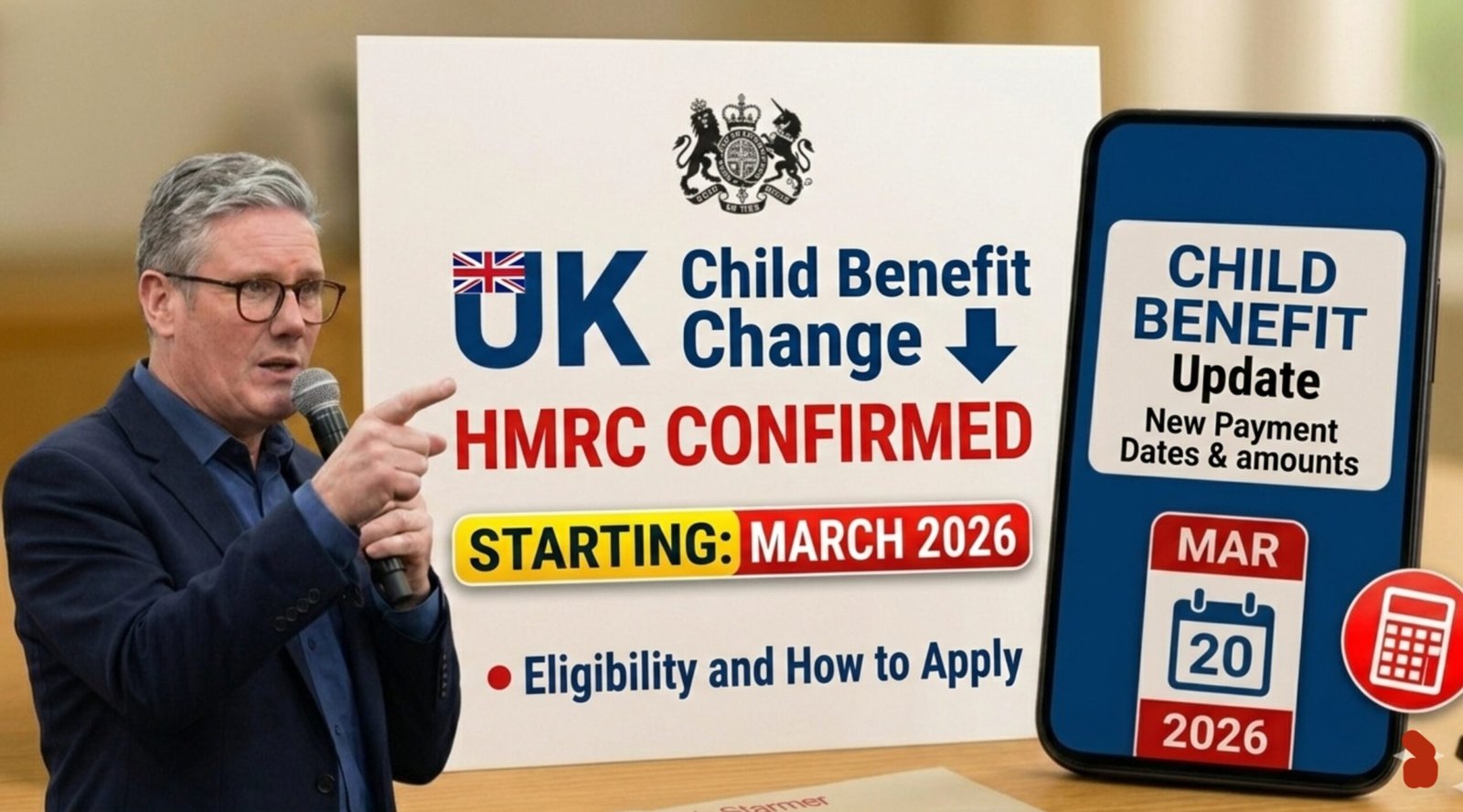
For millions of families across the United Kingdom, Child Benefit is a cornerstone of the household budget. Whether it’s used for school uniforms, extra-curricular activities, or simply balancing the weekly food shop, the regular payment from HM Revenue and Customs (HMRC) provides a vital layer of financial security. However, as we approach the end of the 2025/26 tax year, significant updates are coming into play.
From March 2026, a series of changes to rates, thresholds, and administrative systems will begin to affect how much parents receive and how they interact with HMRC. While the government has shifted away from some previously proposed “household-based” reforms, the new confirmed measures represent a strategic push to modernize the benefit and align it with current economic pressures. Here is a detailed look at what every UK resident needs to know about the Child Benefit landscape in 2026.
The 2026 Benefit Rate Increase
The most immediate change for parents in March and April 2026 is the annual uprating of benefit amounts. HMRC has confirmed that Child Benefit rates will rise in line with the Consumer Price Index (CPI) from the previous September, which was recorded at 3.8%. This increase is designed to help families keep pace with the ongoing cost of living.
Starting in April 2026, the rate for the eldest or only child is set to rise from £26.05 to £27.05 per week. For each additional child, the rate will increase from £17.25 to £17.90 per week. While a few pence a week might seem modest, for a family with three children, this adds up to an extra £85.80 over the course of the year. These new rates will be automatically applied to existing claims, meaning parents do not need to contact HMRC to receive the higher amount.
The High Income Charge Thresholds
One of the biggest areas of confusion for UK residents is the High Income Child Benefit Charge (HICBC). For years, this was a “tax trap” for families where one parent earned just over £50,000. However, the system was significantly overhauled in 2024, and those changes are now fully embedded as we head into 2026.
Missed Your DWP March 2026 Bonus? Here’s What You Can Do
As of March 2026, you only have to pay the charge if your individual “adjusted net income” is over £60,000. The “taper” is also much more gradual than it used to be. The charge is calculated at 1% of the benefit for every £200 of income above the £60,000 mark. This means you only lose the benefit entirely if your income reaches £80,000. This higher ceiling has allowed an estimated 170,000 more families to keep at least a portion of their Child Benefit compared to the pre-2024 rules.
Household vs Individual Income Debate
There was a long-standing proposal to move Child Benefit to a “household income” basis by April 2026. This would have addressed the perceived unfairness where a single parent on £61,000 paid the tax charge, but a couple earning £59,000 each (a total of £118,000) paid nothing.
However, HMRC and the Treasury officially confirmed in late 2024 and throughout 2025 that this specific reform will not go ahead in 2026. The government cited the high cost of implementation—estimated at over £1.4 billion—and the administrative complexity for HMRC’s systems. For residents, this means the HICBC remains based on the highest earner’s individual income. If you are the higher earner in your household, you remain responsible for the tax charge, even if the benefit is paid into your partner’s bank account.
New Digital Services for Tax Codes
A major administrative change launching for the 2026 tax year is the ability to pay the High Income Child Benefit Charge directly through your tax code. Previously, almost everyone who owed the charge had to register for Self Assessment and file a tax return, a process many found daunting and time-consuming.
HMRC is now rolling out a new digital service that allows employed individuals to “opt-in” to have the charge deducted via PAYE (Pay As You Earn). By adjusting your tax code, HMRC can collect the money gradually from your monthly salary throughout the year. This removes the need for a year-end “tax bill shock” and simplifies life for thousands of families who otherwise have very simple tax affairs.
The Removal of the Two-Child Limit
While often confused with Child Benefit, the “two-child limit” actually applies to the child element of Universal Credit and Child Tax Credits. However, in a major policy shift confirmed for April 2026, the government has moved to abolish this limit for Universal Credit claims.
Unlike Universal Credit, the standard HMRC Child Benefit has never had a cap on the number of children you can claim for. You can receive the “additional child” rate for your third, fourth, or tenth child. With the removal of the limit in the wider benefit system in 2026, many families will see a significant boost in their overall monthly income, but it is important to remember that you must still make a separate claim for Child Benefit via HMRC for every newborn to trigger these payments.
Protecting Your National Insurance Credits
HMRC is using the 2026 updates to remind parents of the importance of “claiming” Child Benefit even if they choose not to “receive” the money. If your income is over £80,000, you might decide to opt out of payments to avoid the hassle of the tax charge.
However, by officially making the claim (and ticking the box to “not receive payments”), you continue to earn National Insurance credits. These credits are vital for your State Pension. To get a full State Pension, you typically need 35 qualifying years of National Insurance. For a non-working parent or a parent earning below the threshold, the Child Benefit claim acts as a “credit bridge” until the child turns 12. HMRC has confirmed that a new digital look-up tool will be available in the HMRC app by March 2026 to help parents track these credits more easily.
The 16 to 19 Rule Clarification
As we move into 2026, HMRC is also tightening the guidance around “Qualifying Young Persons.” Child Benefit usually stops on the 31st of August following a child’s 16th birthday unless they stay in “approved” education or training.
The 2026 updates clarify that “approved” training includes things like Foundation Apprenticeships and certain traineeships, but does not include advanced apprenticeships (Level 4 and above) where the young person is paid a wage by an employer. Parents are being urged to update their status via the HMRC app before the summer deadline to avoid “overpayment debts” which HMRC is becoming increasingly strict about recovering in 2026.
Changes for Separated Parents
Relationship breakdowns can make Child Benefit a complex issue. HMRC rules state that only one person can receive Child Benefit for a child. If two people claim for the same child, HMRC will usually pay the person the child lives with most of the time.
In March 2026, new “shared care” guidance will be issued to help parents navigate these disputes without reaching a legal deadlock. If a child spends exactly 50% of their time with each parent, the parents must decide between them who will receive the payment. If they cannot agree, HMRC will make the decision based on who is deemed to provide the “main” financial support. In the 2026 system, this decision-making process will be more automated, using data from other government departments to settle disputes faster.
Moving toward a “Single Direct” System
HMRC’s long-term “Transformation Roadmap” hits a major milestone in March 2026 with the integration of Child Benefit into the “Single Direct” payment platform. This is a behind-the-scenes IT change, but it has big benefits for users.
It means that if you change your bank details or address in the HMRC app, it will update across all your tax and benefit records simultaneously. Gone are the days of having to call three different departments to tell them you’ve moved house. This is part of the government’s 2026 goal to make all personal tax and benefit services “digital by default,” reducing the need for paper forms and long wait times on the phone.
Preventing Fraud and Identity Theft
With the shift to digital-first services in 2026, HMRC is also ramping up security. Residents are being warned about a surge in “Child Benefit Phishing” scams. These often involve a text or email claiming that your “Child Benefit has been suspended” or that you are “due a 2026 rebate.”
HMRC has officially confirmed that they will never ask for bank details or personal info via a link in a text message. The only way to securely manage your claim in 2026 is through the official GOV.UK website or the HMRC app. If you receive a suspicious message, you should report it to HMRC’s dedicated “phishing” email address before deleting it.
What to Do Before April 2026
As the current tax year draws to a close, there are three things every eligible parent should do. First, check your “Adjusted Net Income”—if you’ve had a pay rise or a bonus that pushes you over £60,000, you need to prepare for the HICBC. Second, download the HMRC app; it is now the fastest way to report changes and see your payment dates.
Finally, if you have a child who will turn 16 in 2026, keep an eye out for the “extension” form. Failing to return this on time is the number one reason why Child Benefit payments are stopped unexpectedly. By staying proactive, you can ensure that the March 2026 transition is smooth and that your family continues to receive every penny it is entitled to.