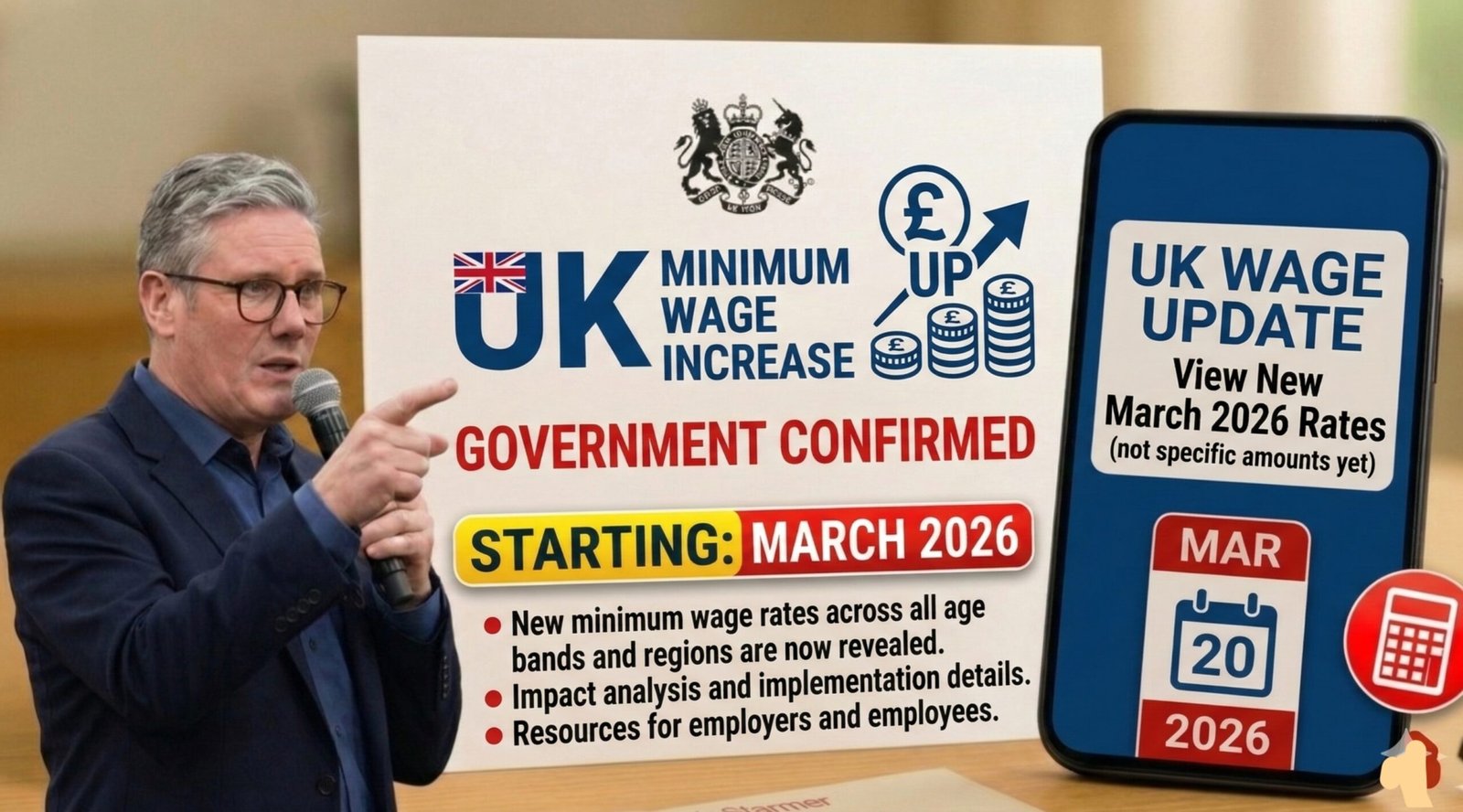
The UK government has officially confirmed a significant uplift in the National Minimum Wage and National Living Wage rates, scheduled to take effect from April 1, 2026. This announcement comes after the government accepted the full recommendations of the independent Low Pay Commission (LPC), aiming to ensure that the lowest-paid workers in the country keep pace with the rising cost of living and median earnings growth. For millions of employees across England, Scotland, Wales, and Northern Ireland, this represents a vital boost to their monthly take-home pay.
New rates for the National Living Wage
The headline figure in this latest update is the increase for workers aged 21 and over, who are eligible for the National Living Wage (NLW). From April 2026, the NLW will rise from £12.21 to £12.71 per hour. This 50p per hour increase represents a 4.1% rise, which the government states will help the rate remain at at least two-thirds of median hourly earnings in the UK.
For a full-time worker on a standard 37.5-hour week, this change translates to an annual pay boost of approximately £975 before tax. While this is the second-smallest percentage increase since the NLW was introduced in 2016, it follows much larger jumps in previous years, reflecting a stabilizing but still upward-trending wage floor.
UK Confirms £250 Cost-of-Living Payment for March 8 –13 Rollout
Major boost for workers aged 18 to 20
Perhaps the most dramatic change in the 2026 schedule is the substantial pay rise confirmed for younger workers. In a continued effort to align youth pay more closely with the adult National Living Wage, those aged 18 to 20 will see their minimum rate jump from £10.00 to £10.85 per hour.
This 8.5% increase is significantly higher than the boost given to older adults and represents an 85p per hour raise. This move is part of a longer-term government commitment to eventually abolish the separate youth rate entirely, potentially moving to a single adult rate for everyone over 18 in the coming years. For a young worker in a full-time role, this could mean an extra £1,600 in gross annual income.
Apprentices and under-18s rate updates
Workers aged 16 to 17 and those on apprenticeships are also set for a fair increase. Their hourly rate will rise by 6%, moving from £7.55 to £8.00 per hour. This 45p increase ensures that those just starting their careers or undergoing vocational training are not left behind as the wider wage floor rises.
It is important to note that apprentices who are aged 19 or over and have completed the first year of their apprenticeship are entitled to the full minimum wage for their age group. For example, a 22-year-old apprentice in their second year must be paid at least the National Living Wage of £12.71 per hour from April 2026, rather than the lower apprentice rate.
The rationale behind the 2026 increases
The Low Pay Commission’s recommendations are based on a complex analysis of the UK labor market, expected inflation trends, and the overall health of the economy. The commission noted that while wage growth has been stronger than expected, many low-paid workers continue to face day-to-day challenges due to the general cost of living.
The 2026 rates are designed to balance the needs of workers with the financial pressures on businesses. Employers are currently managing several cost increases simultaneously, including higher National Insurance contributions and pension costs, which may make the implementation of these new wage rates more challenging for some sectors.
Impact on the retail and hospitality sectors
Certain sectors of the UK economy will feel the impact of these changes more than others. Retail, hospitality, and social care traditionally employ a high proportion of staff on minimum wage rates. For business owners in these industries, the 8.5% jump for 18-to-20-year-olds is particularly significant, as these sectors often rely on younger staff.
Industry experts have warned of “pay compression,” where the gap between entry-level staff and supervisors becomes narrower because the legal minimum keeps rising faster than general salary bands. This can lead to increased risk for employers who might inadvertently breach compliance rules if they do not carefully review their entire pay structure ahead of April.
Compliance and the new Fair Work Agency
The government is also stepping up enforcement to ensure every eligible worker receives the new rates. Alongside the wage increases, the new Fair Work Agency (FWA) is set to launch in April 2026. This agency will bring together the enforcement of various employment rights, including the National Minimum Wage, Statutory Sick Pay, and holiday pay.
Failing to pay the legal minimum is a serious offence in the UK. Employers found to be in breach face heavy penalties, which can be as high as 200% of the arrears owed (up to £20,000 per worker), and they may be publicly “named and shamed” by HMRC.
Why the government confirms rates in March
While the recommendations are often discussed earlier in the year, the formal confirmation in March 2026 provides the final legal certainty needed for payroll systems to be updated. This timeline gives businesses just enough time to adjust their 2026/27 budgets before the start of the new financial year on April 6.
For many councils and local government bodies, the April 2026 rise is particularly urgent. In some cases, the new statutory minimum of £12.71 will actually overtake existing pay scales, requiring immediate remedial action to ensure all public sector employees remain within the law.
National Living Wage vs Real Living Wage
It is important for both workers and employers to distinguish between the government’s National Living Wage and the “real Living Wage”. The National Living Wage is a statutory requirement—it is the law.
In contrast, the real Living Wage is a voluntary rate set by the Living Wage Foundation based on the actual cost of living in the UK. For 2026, the real Living Wage is set to rise to £13.45 across the UK and £14.80 in London. While over 16,000 employers have committed to paying this higher voluntary rate, the government’s £12.71 remains the absolute legal floor.
How the increase affects take-home pay
The 50p increase to £12.71 might seem modest on paper, but for a household where multiple members are on the minimum wage, the cumulative effect is significant. When combined with the personal tax allowance, which determines how much you can earn before paying income tax, these raises are designed to put more money directly into the pockets of the working poor.
However, some critics argue that the 4.1% rise for over-21s barely covers the increased cost of essentials like rent and energy bills. The 2026 rates will be a major test of whether the government’s “work-first” approach can effectively combat poverty during a period of fluctuating inflation.
Preparing for the April transition
For workers, the most important step is to check their payslips in April 2026. Depending on your pay reference period—the dates your work is calculated for—the new rate might not appear on your very first paycheck of the month. If you find you are being paid less than the legal minimum for your age, you have the right to raise a grievance with your employer or contact ACAS for advice.
For employers, the focus should be on auditing all staff pay, especially those on annual salaries who might fall below the hourly threshold if they work overtime. Businesses are also being encouraged to look at automation or adjusting work patterns to help absorb the increased payroll costs without resorting to redundancies.
Looking ahead to 2027 and 2028
The 2026 increases are just one step in a multi-year plan. The Low Pay Commission has already signaled its intention to potentially lower the National Living Wage age threshold to 20 as early as 2027, with the ultimate goal of having a single rate for everyone aged 18 and over by the end of the decade.
This “path to alignment” suggests that younger workers can expect further above-average percentage increases in the coming years. While this is a victory for youth campaigners, it remains a point of concern for small businesses that rely heavily on younger staff and may struggle to keep up with the rising wage floor.
A summary of the 2026 wage landscape
As we approach the April 1 deadline, the new wage landscape for the UK is now clear. With the National Living Wage at £12.71 and the youth rate rising significantly to £10.85, the government is making a clear statement about the value of work across all age groups.
Whether these changes will be enough to ease the financial pressure on UK households or if they will lead to further price rises in shops and restaurants is a debate that will continue throughout the year. For now, millions of workers can look forward to a heavier pay packet starting this spring.