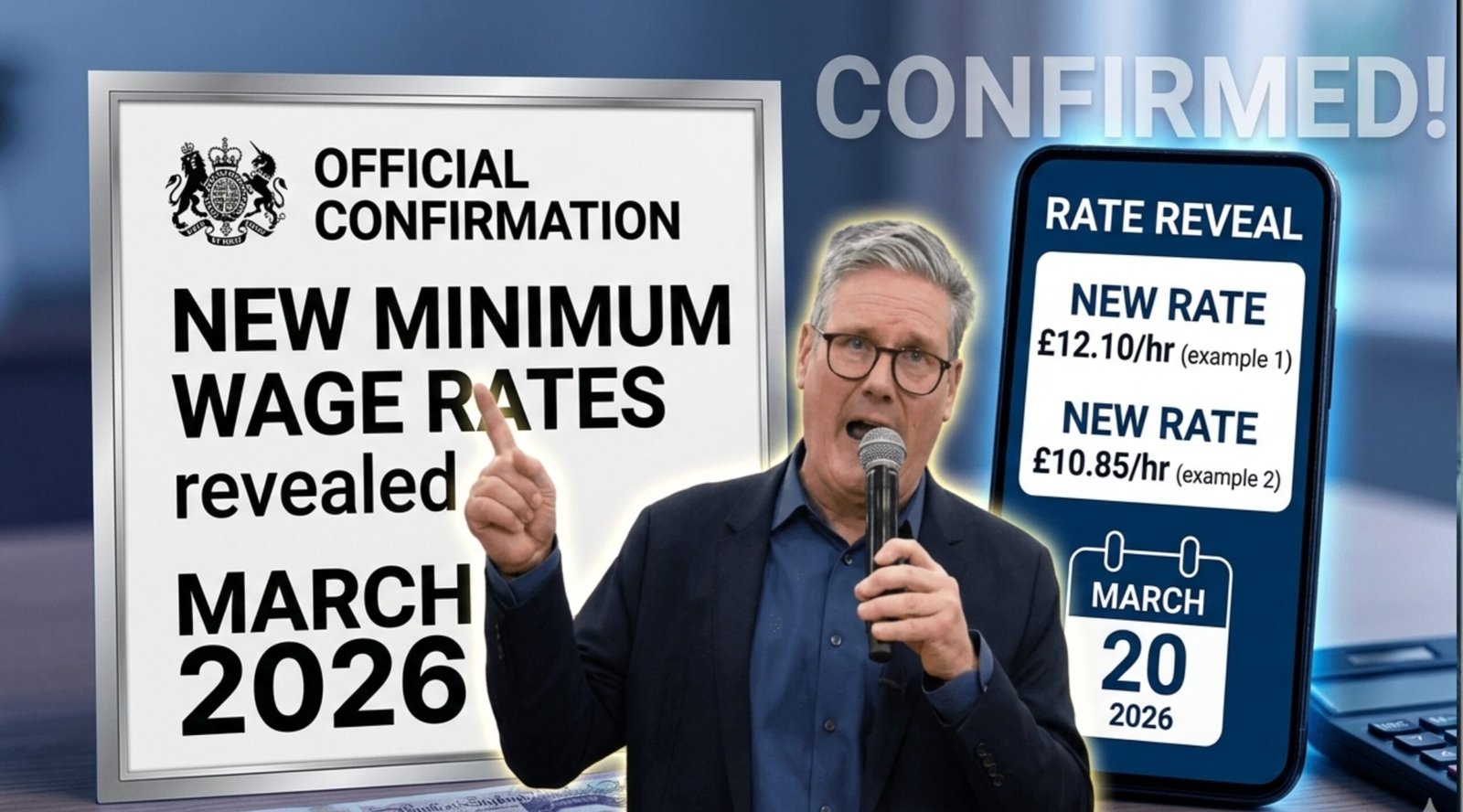
The UK government has officially confirmed the new National Minimum Wage and National Living Wage rates set to take effect from April 2026. This announcement follows a period of intense economic scrutiny and rising living costs, providing a much-needed roadmap for both workers and business owners across the country.
Understanding these changes is crucial for anyone navigating the current job market or managing a payroll. The shift represents not just a numerical increase but a continued commitment to the “New Deal for Working People,” aiming to ensure that work pays enough to meet the basic needs of a modern household.
The economic context of the 2026 increase
To understand why the 2026 rates are significant, we have to look at the broader economic landscape of the United Kingdom. Over the last few years, inflation has been a persistent shadow over the high street. While the peak of the cost-of-living crisis has stabilized, the “floor” for prices on essentials like food, energy, and rent has shifted permanently higher.
The Low Pay Commission, which advises the government on these rates, has shifted its remit recently. Previously, the goal was largely to keep pace with median earnings. Now, there is a stronger emphasis on ensuring the minimum wage provides a genuine “living” income. This means the 2026 hike isn’t just a routine adjustment; it is a calculated attempt to restore purchasing power to the lowest-paid sectors of the workforce.
New rates for the National Living Wage
The National Living Wage is the rate applied to workers aged 21 and over. Starting in April 2026, this figure will see a substantial boost. For a full-time worker on a standard 37.5-hour week, this increase translates to hundreds of pounds of additional annual income before tax.
This change is particularly impactful for the retail, hospitality, and social care sectors. These industries employ a vast percentage of the UK’s minimum wage workforce. For employees in these fields, the March announcement provides a sense of security, knowing that their hourly value is being adjusted to reflect the current economy. However, for small business owners in these same sectors, the announcement brings the challenge of balancing books against rising overheads.
Impact on younger workers and apprentices
The 2026 update also brings changes to the National Minimum Wage tiers for younger employees and those in apprenticeships. Historically, there has been a significant gap between the pay of a 18-year-old and a 21-year-old. The government’s long-term strategy has been to narrow this gap, recognizing that young people face many of the same costs as their older colleagues.
For 18 to 20-year-olds, the percentage increase in 2026 is actually higher than the headline rate for older adults. This is a deliberate move to move toward a single “adult rate” in the future. Apprentices, too, will see their hourly pay rise, making vocational training a more financially viable path for school leavers who might otherwise be tempted by immediate, higher-paying unskilled labor.
What this means for your take home pay
While the hourly rate is the figure everyone sees in the news, the reality of the increase is felt in the monthly pay packet. It is important for workers to remember that as the minimum wage rises, it may push some individuals into a higher tax bracket or reduce the amount of Universal Credit they are eligible for.
Most workers will still find themselves significantly better off, but it is always wise to use a tax calculator to see how the gross increase affects net income. The personal allowance—the amount you earn before paying income tax—remains a key factor here. If the personal allowance does not rise in tandem with the wage increase, a portion of the “raise” effectively goes back to the Treasury in the form of tax.
Challenges for small businesses and employers
While the news is a victory for workers, the business community has expressed a mix of caution and concern. For a small café or a local cleaning firm, labor is often the highest cost. A mandatory wage increase means that these businesses must find ways to increase productivity or, more commonly, raise their own prices.
There is a delicate balance to strike. If wages rise too quickly, small businesses might reduce hiring or cut back on staff hours to stay afloat. The government has attempted to mitigate this by maintaining certain business rate reliefs, but many independent owners feel the pressure. It is a reminder that the economy is an ecosystem where every change in one area creates a ripple effect elsewhere.
The role of the Low Pay Commission
The Low Pay Commission plays a vital role in this process. They are an independent body made up of employers, trade unions, and academics. Their job is to look at the data—employment levels, inflation, and business survival rates—and recommend a figure that helps workers without causing mass unemployment.
In the lead-up to the March 2026 confirmation, the commission conducted extensive consultations across the UK. They listened to workers who were struggling to choose between heating and eating, but they also listened to employers who were worried about the viability of their shops and services. The 2026 rates are the result of this balancing act, intended to be a “middle ground” that keeps the UK competitive while protecting the vulnerable.
Regional differences and the London Living Wage
It is important to distinguish between the government’s mandatory National Living Wage and the voluntary Real Living Wage. The rates confirmed for March 2026 apply nationwide. However, in London, the cost of living remains significantly higher than the national average.
Many employers in the capital choose to pay the London Living Wage, which is an independently calculated rate based on the actual cost of living in the city. While the mandatory national rate is catching up, those living in London will still find that the “minimum” goes much less far than it would in the North of England or Wales. This regional disparity continues to be a topic of debate in Parliament.
Preparing for the transition in April
With the rates confirmed in March, both employers and employees have a few weeks to prepare before the changes hit the payroll in April. For employees, it is a good time to check your contract and ensure your employer is aware of the new legal requirements. Most companies update their systems automatically, but errors can happen, especially in smaller setups.
For employers, the priority is updating payroll software and forecasting the impact on the annual budget. It is also an opportunity to communicate with staff. Acknowledging the increase and discussing how the business plans to handle it can go a long way in maintaining a positive workplace culture during times of economic change.
The long term outlook for UK wages
The 2026 increase is part of a broader trend toward higher base pay in the UK. For decades, the UK was seen as a low-wage, high-employment economy compared to some European neighbors. That model is shifting. The focus is now on “high skill, high wage,” though the transition is proving to be a long road.
As we look beyond 2026, the conversation will likely turn toward the four-day work week and the impact of artificial intelligence on entry-level jobs. For now, however, the focus remains on the immediate reality of the new rates. They provide a floor that prevents exploitation and ensures that the lowest-paid members of society are not left behind as the country moves forward.
Final thoughts on the 2026 wage hike
The confirmation of the new minimum wage rates is a milestone in the UK’s economic calendar. It reflects the ongoing struggle to define what “fair pay” looks like in a post-pandemic, high-inflation world. While it won’t solve every financial problem for the average household, it is a significant step in the right direction for millions of workers.
As the new rates take effect, the true test will be how the economy absorbs the cost. If productivity rises and consumer spending stays strong, the 2026 increase will be seen as a success. For the individual worker, it simply means a little more breathing room at the end of the month, which, in today’s climate, is no small thing.