Driving represents much more than just a way to get from point A to point B. For many people in the UK, especially those entering their 60s and 70s, it is a symbol of independence, a lifeline to social circles, and a practical necessity for daily chores. However, as we age, the Driver and Vehicle Licensing Agency (DVLA) introduces specific requirements to ensure that everyone on the road remains safe.
If you are approaching your 70th birthday, or if you are already there, the rules of the road change slightly—not in how you drive, but in how you maintain your legal right to do so. Understanding these transitions is vital to avoid hefty fines or, worse, finding yourself uninsured.
The Age 70 Milestone
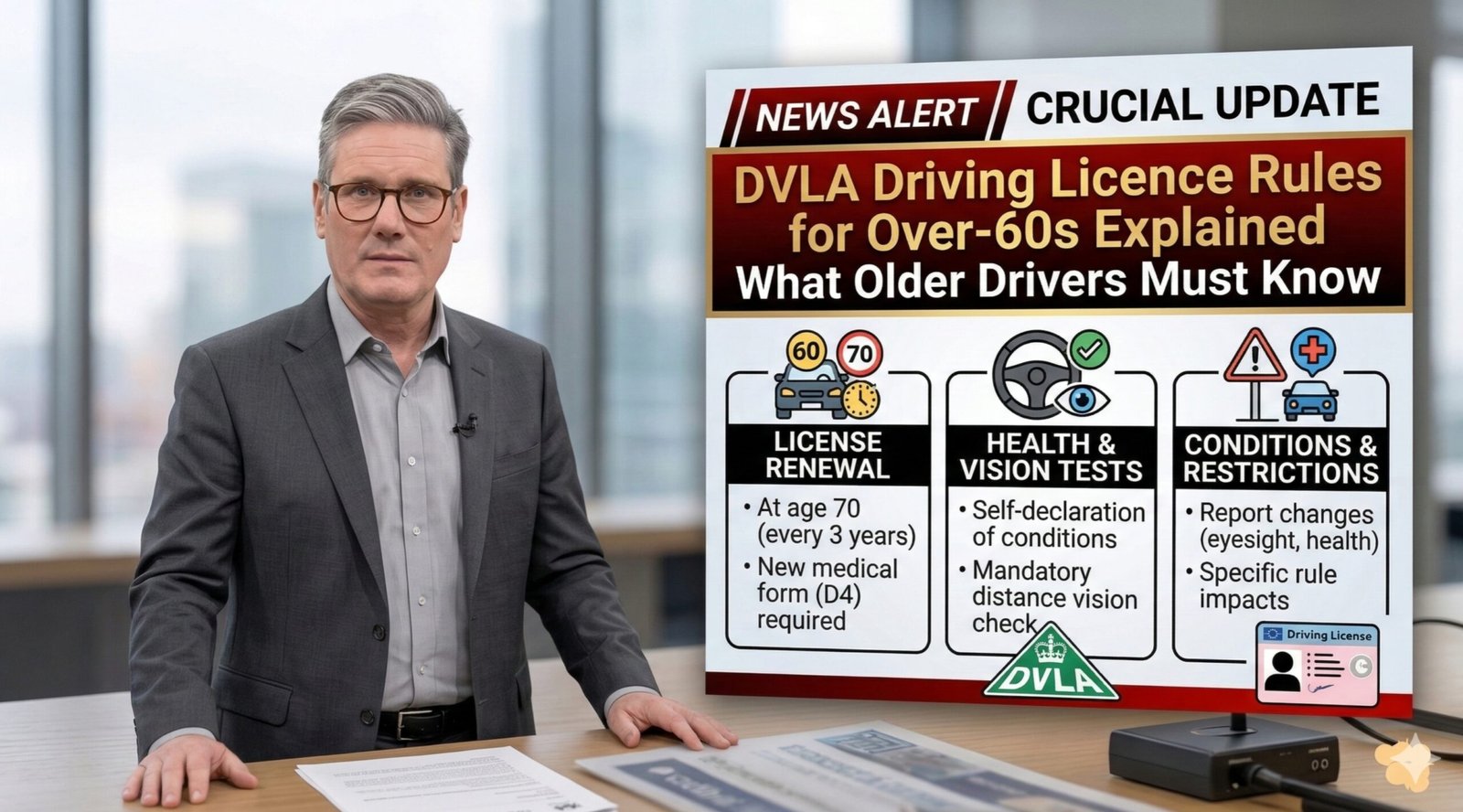
In the UK, your standard driving licence expires when you reach the age of 70. This does not mean you have to stop driving; it simply means you must renew your licence with the DVLA. Unlike your younger years, where a licence might have been valid for decades, once you hit 70, you must renew it every three years.
The DVLA usually sends out a D46P renewal form about 90 days before your 70th birthday. It is crucial not to ignore this. If you continue to drive after your birthday without having renewed your licence, you are technically driving unlicensed, which can lead to a £1,000 fine and the seizure of your vehicle.
Renewing Your Licence Online
The most efficient way to handle your renewal is through the official GOV.UK website. The online service is free, and it is significantly faster than the paper-based alternative. To use the online service, you need to be a resident of Great Britain, have your Government Gateway ID (or be ready to create one), and possess your National Insurance number and passport number.
When you renew online, your new licence should arrive within a week. If you choose the postal route using the D1 form (available at most Post Offices), it can take up to three weeks or longer during busy periods.
Medical Standards for Older Drivers
The primary reason the DVLA requires frequent renewals after 70 is to ensure drivers remain medically fit. When you renew, you are required to make a self-declaration regarding your health. You must disclose any medical conditions that could affect your ability to drive safely.
Common conditions that must be reported include diabetes (especially if treated with insulin), Parkinson’s, heart conditions, or any condition affecting your vision. It is a common misconception that a diagnosis automatically means you lose your licence. In most cases, the DVLA simply needs to be aware so they can assess whether you can continue driving safely, perhaps with certain restrictions or regular check-ups.
Vision Requirements and Eye Tests
Good eyesight is non-negotiable for road safety. As we age, conditions like cataracts, glaucoma, or macular degeneration become more common. The law states that you must be able to read a car number plate from a distance of 20 metres (about 65 feet), with glasses or contact lenses if necessary.
UK Child Benefit Change Starting March 2026, HMRC Confirms
You also need to have an adequate field of vision. While the DVLA doesn’t require a formal eye test certificate every time you renew, you are legally obligated to tell them if your eyesight deteriorates. It is highly recommended that drivers over 60 have an eye test every two years to catch any issues before they become a danger on the road.
Understanding Grandfather Rights
Many drivers who passed their test decades ago hold “Grandfather Rights.” These are additional categories on your licence that allow you to drive larger vehicles, such as medium-sized lorries (C1) or minibuses (D1). When you reach 70 and undergo the standard renewal, these extra categories are usually removed by default.
If you wish to keep your C1 or D1 entitlements, the process is more rigorous. You will need to file a D2 application form and provide a D4 medical examination report completed by a doctor. This involves a physical assessment to ensure you meet the higher medical standards required for larger vehicles.
The D4 Medical Examination
If you are aiming to keep your heavy vehicle or minibus entitlements, the D4 medical is a mandatory hurdle. A doctor will check your blood pressure, listen to your heart, and test your vision and hearing. They will also look for signs of chronic neurological or psychiatric issues.
While your GP can perform this, many private providers offer D4 medicals at a lower cost and with shorter waiting times. Keep in mind that even if you pass, these specific entitlements will still need to be renewed every three years alongside your standard car licence.
Reporting New Medical Conditions
You don’t have to wait until your licence is up for renewal to talk to the DVLA. If you develop a “notifiable” medical condition at any age, you are legally required to inform them immediately. This includes things like strokes, episodes of fainting, or severe sleep apnoea.
Failing to report a condition is a criminal offence. Furthermore, if you are involved in an accident and it is discovered you had an undeclared medical condition, your insurance provider will likely refuse to pay out, leaving you personally liable for damages.
Voluntary Surrender of a Licence
There may come a time when a driver, or their family, feels that it is no longer safe for them to be behind the wheel. If you decide to stop driving for medical reasons, you can voluntarily surrender your licence to the DVLA.
Surrendering your licence voluntarily makes it much easier to get it back later if your health improves. If the DVLA has to revoke your licence on medical grounds, the process of reapplying is often more complicated and involves more paperwork and medical evidence.
Insurance Costs for Over-60s
Interestingly, many drivers find that their insurance premiums actually drop or stabilise in their 60s. This is because insurers view this demographic as experienced and generally less likely to take risks compared to younger drivers.
However, once you pass 75 or 80, prices may begin to creep up again. To keep costs low, ensure you accurately report your annual mileage (which often decreases after retirement) and consider adding a younger, experienced driver with a clean record to your policy as a named driver.
Driving Assessments for Peace of Mind
If you are feeling nervous about your driving or if family members have expressed concern, you might consider a voluntary driving assessment. Organisations like RoSPA (Royal Society for the Prevention of Accidents) or IAM RoadSmart offer “mature driver” reviews.
These are not “tests”—you cannot “fail” them in a way that loses you your licence. Instead, a professional observer sits with you and offers tips on how to adjust your driving style to compensate for slower reaction times or decreased flexibility. It’s an excellent way to boost confidence and stay safe for longer.
Common Myths About Older Drivers
There are many myths surrounding older drivers that cause unnecessary stress. One myth is that the DVLA wants to take older people off the road. In reality, the DVLA’s goal is to keep people driving for as long as it is safe to do so.
Another myth is that you must retake your driving test at 70. This is false. Unless you have been disqualified or have a specific medical reason that requires a re-test, your renewal is purely a matter of paperwork and health self-declaration.
Adapting Your Vehicle
As we get older, physical comfort becomes a bigger factor in driving safety. Modern car technology offers numerous features that can assist older drivers. Power steering, automatic gearboxes, and parking sensors can take the physical strain out of driving.
If you struggle with mobility, there are also various adaptations available, such as swivel seats, pedal extensions, or electronic handbrakes. Many of these can be fitted to your existing car to help you maintain your independence without compromising on safety.
Planning for the Future
It is wise to have a “driving retirement” plan. Just as we plan for our financial retirement, thinking about how we will get around if we eventually decide to stop driving is important. Researching local bus routes, community transport schemes, or even budgeting for occasional taxis can make the eventual transition much smoother.
The UK has various “blue badge” schemes and travel concessions for older citizens that can help maintain mobility even without a car. Knowing these options in advance removes the fear of the unknown.
Staying Updated on Road Rules
The Highway Code is updated more frequently than many people realise. Since most over-60s passed their test decades ago, there may be new road signs, markings, or rules (such as the “hierarchy of road users” introduced recently) that you might not be familiar with.
Spending an hour or two reading the latest digital version of the Highway Code or taking an online mock theory test is a great way to ensure your knowledge is as sharp as your driving. It ensures that you aren’t caught out by new legislation or changes in road layouts like “smart” motorways.
Final Thoughts for the Over-60 Driver
Reaching 60 or 70 isn’t a signal to slow down, but it is a signal to be more mindful. By staying on top of your DVLA renewals, being honest about your health, and keeping your vehicle in good condition, there is no reason why you cannot enjoy the freedom of the road well into your 8th or 9th decade.
The key is proactivity. Don’t wait for the D46P form to arrive to think about your health or your eyesight. Stay informed, stay healthy, and keep driving safely.