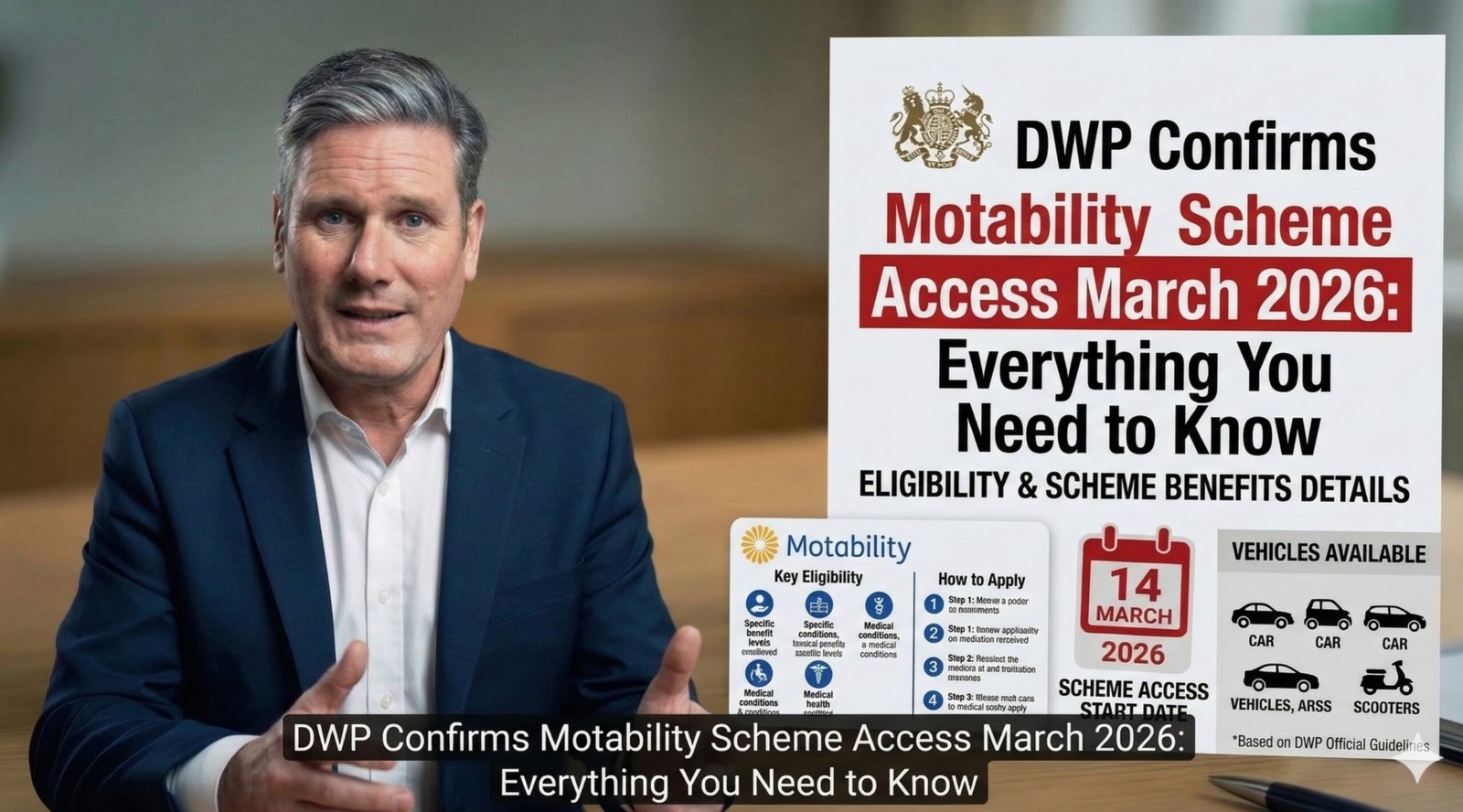
The Motability Scheme has long been a cornerstone of independence for disabled people across the UK. As we move into March 2026, the Department for Work and Pensions (DWP) has provided updated clarifications on eligibility, ensuring that those who rely on these services have a clear roadmap for the year ahead. Navigating the world of disability benefits can often feel like wading through a sea of paperwork, but the latest updates aim to streamline the process of getting—and staying—mobile.
For many, a vehicle isn’t just a luxury; it is the difference between being trapped at home and being able to hold down a job, visit family, or simply run daily errands. This guide breaks down the confirmed benefits, the specific criteria for 2026, and how the scheme continues to evolve to meet modern accessibility needs.
Understanding the Core of the Motability Scheme
At its heart, the Motability Scheme is a simple concept designed to remove the financial and administrative stress of vehicle ownership. Instead of buying a car outright, eligible individuals use their mobility allowance to lease a brand-new vehicle. This “all-inclusive” package covers insurance, breakdown assistance, servicing, and maintenance.
The beauty of the scheme lies in its predictability. In an era where the cost of living remains a significant concern, knowing that your car costs are covered by your benefit payment provides immense peace of mind. The DWP’s confirmation for March 2026 reaffirms that this exchange remains a priority for supporting the UK’s disabled community.
Who Qualifies for the Scheme in March 2026
The eligibility criteria remain tied to specific higher-rate mobility benefits. To join the scheme, you must be in receipt of one of the following allowances with at least 12 months remaining on your award:
-
Higher Rate Mobility Component of Disability Living Allowance (DLA): Primarily for those who haven’t yet transitioned to PIP.
-
Enhanced Rate Mobility Component of Personal Independence Payment (PIP): The most common route for adults under state pension age.
-
Higher Rate Mobility Component of Child Disability Payment (Scotland): Specifically for families in Scotland.
-
Enhanced Rate Mobility Component of Adult Disability Payment (Scotland): The Scottish replacement for PIP.
-
War Pensioners’ Mobility Supplement (WPMS): For those with service-related disabilities.
-
Armed Forces Independence Payment (AFIP): For service personnel and veterans.
It is important to note that if your benefit award is currently under review or if you have less than 12 months left before your next assessment, you may need to wait until your new award letter arrives before starting a new lease.
New Vehicle Options and the Electric Shift
March 2026 marks a significant milestone in the UK’s transition toward greener transport. The Motability Scheme has significantly expanded its fleet of Electric Vehicles (EVs). While petrol and diesel cars are still available, the DWP and Motability are offering enhanced support for those ready to make the switch to electric.
If you choose an EV for the first time, the scheme often includes the installation of a home charging point at no extra cost. For those without off-street parking, access to a network of public charging points is frequently integrated into the lease package. This push towards electrification isn’t just about the environment; for many disabled drivers, EVs offer a smoother, quieter, and more technologically advanced driving experience that can reduce physical fatigue.
The Financial Benefits of the 2026 Package
One of the most frequent questions regarding the March 2026 update is the cost. The scheme operates on a “worry-free” leasing model. Most of your mobility allowance is paid directly to Motability every four weeks. In return, you get:
-
A Brand-New Car: Typically every three years (or five years for Wheelchair Accessible Vehicles).
-
Full Insurance Coverage: This includes up to three named drivers, which is vital for those who cannot drive themselves and rely on carers or family members.
-
Servicing and Maintenance: All regular checks and repairs are covered.
-
Tyre and Windscreen Replacement: Essential for safety and often a hidden cost in private ownership.
-
Roadside Assistance: RAC breakdown cover is included 24/7.
For those who choose a vehicle that costs less than their weekly allowance, the remaining balance is paid directly to the claimant by the DWP. Conversely, high-end or specialized vehicles may require an “Advance Payment”—an upfront sum paid at the start of the lease.
Enhancements to Wheelchair Accessible Vehicles
For many, a standard car—even one with adaptations—isn’t enough. Wheelchair Accessible Vehicles (WAVs) are a critical part of the March 2026 confirmation. The DWP has recognized the rising costs of vehicle conversions and has continued to work with the Motability Charity to provide grants.
If the Advance Payment for a necessary WAV is beyond a person’s financial reach, the Motability Foundation may be able to provide financial assistance. These vehicles are bespoke, designed to allow a wheelchair user to travel as a passenger or drive while remaining in their chair. The commitment for 2026 includes shorter lead times for these specialized conversions, which have historically seen long delays.
Named Drivers and Flexibility for Non-Drivers
A common misconception is that you must be the driver to benefit from the Motability Scheme. This is not the case. The DWP confirms that many claimants use their allowance to lease a car that a spouse, parent, or carer drives for them.
In March 2026, the rules around named drivers remain flexible but clear. The vehicle must be used for the benefit of the disabled person. This doesn’t mean the disabled person has to be in the car for every journey, but the primary purpose of the vehicle should be to support their needs—such as doing their shopping, picking up prescriptions, or taking them to appointments.
The Role of Adaptations in 2026
Standard cars often require modifications to make them usable. Whether it’s hand controls for braking and accelerating, swivel seats to aid entry, or electronic hoists to lift mobility scooters into the boot, the 2026 scheme continues to offer many of these adaptations at no additional cost if ordered at the start of the lease.
The technology behind these adaptations has advanced rapidly. We are now seeing more integrated digital interfaces that allow drivers with limited upper body strength to operate secondary functions—like indicators and wipers—with minimal effort. Expert installers work with dealerships to ensure the car is perfectly tailored to the user’s specific physical requirements before delivery.
How the Application Process Works
Applying for the scheme in 2026 has been simplified through the “My Motability” online account. Once you have confirmed your eligibility through your DWP award letter, the process generally follows these steps:
-
Choose Your Specialist: Visit a local dealership with a dedicated Motability specialist.
-
Test Drive: It is vital to ensure the car is comfortable and fits any equipment like wheelchairs or walkers.
-
Place the Order: The dealer handles the paperwork online using your National Insurance number and your DWP award details.
-
PIN Confirmation: When you collect the car, you’ll use a unique PIN to sign the lease agreement.
The DWP automatically redirects the mobility portion of your benefit to Motability, so you never have to worry about missing a lease payment.
Support for Young People and Families
The March 2026 update also highlights support for families with disabled children. Children aged three and over who receive the Higher Rate Mobility Component of DLA or Child Disability Payment are eligible. This is a lifeline for parents who need to transport heavy medical equipment or need a reliable vehicle for frequent hospital visits.
Furthermore, for young disabled people looking to gain their own independence, the Motability Foundation often provides help with the cost of driving lessons. Learning to drive in an adapted vehicle can be expensive, and this support is a game-changer for those entering adulthood.
What Happens at the End of a Lease
As a lease comes to an end—usually after three years—the process is designed to be seamless. You simply choose a new vehicle, and the transition happens on the day you return the old one. If you have looked after the car well, you may even be eligible for a “Good Condition Bonus.”
In 2026, the DWP and Motability have maintained this bonus as an incentive for customers to return vehicles in a state that allows them to be sold easily on the secondary market. This helps keep the entire scheme’s costs lower for everyone involved.
Dealing with Benefit Reassessments
One area of concern for many is what happens if a DWP reassessment results in a loss of the higher-rate mobility allowance. The DWP has updated its guidance for 2026 to ensure that individuals are not left immediately stranded.
If you lose your eligibility, Motability provides a transition package. This usually involves a grace period to return the vehicle and, in many cases, a financial payment to help you find alternative transport. While the loss of a vehicle is difficult, the structured return process provides a buffer that didn’t always exist in years past.
Looking Toward the Future of Mobility
The DWP’s confirmation for March 2026 isn’t just about the current month; it’s about setting a standard for the rest of the decade. With the rise of autonomous features and better infrastructure for disabled travelers, the scheme is evolving from just “providing a car” to “providing a mobility solution.”
Whether you are a long-term user of the scheme or considering it for the first time, the 2026 benefits list proves that the system remains robust. It addresses the rising costs of motoring while ensuring that the UK’s most vulnerable citizens retain the freedom to move, work, and socialize on their own terms.
Final Thoughts on the March 2026 Update
The March 2026 updates to the Motability Scheme serve as a reminder of the vital link between transport and quality of life. By confirming these benefits, the DWP has provided a clear framework for disabled people to plan their futures. The focus on electric vehicles, the continued support for adaptations, and the simplified digital application process all point toward a more accessible and user-friendly experience.
If you believe you are eligible, the best next step is to check your latest DWP award letter and visit the official Motability website to browse the current fleet. Independence is waiting, and the tools to achieve it are more accessible than ever before.