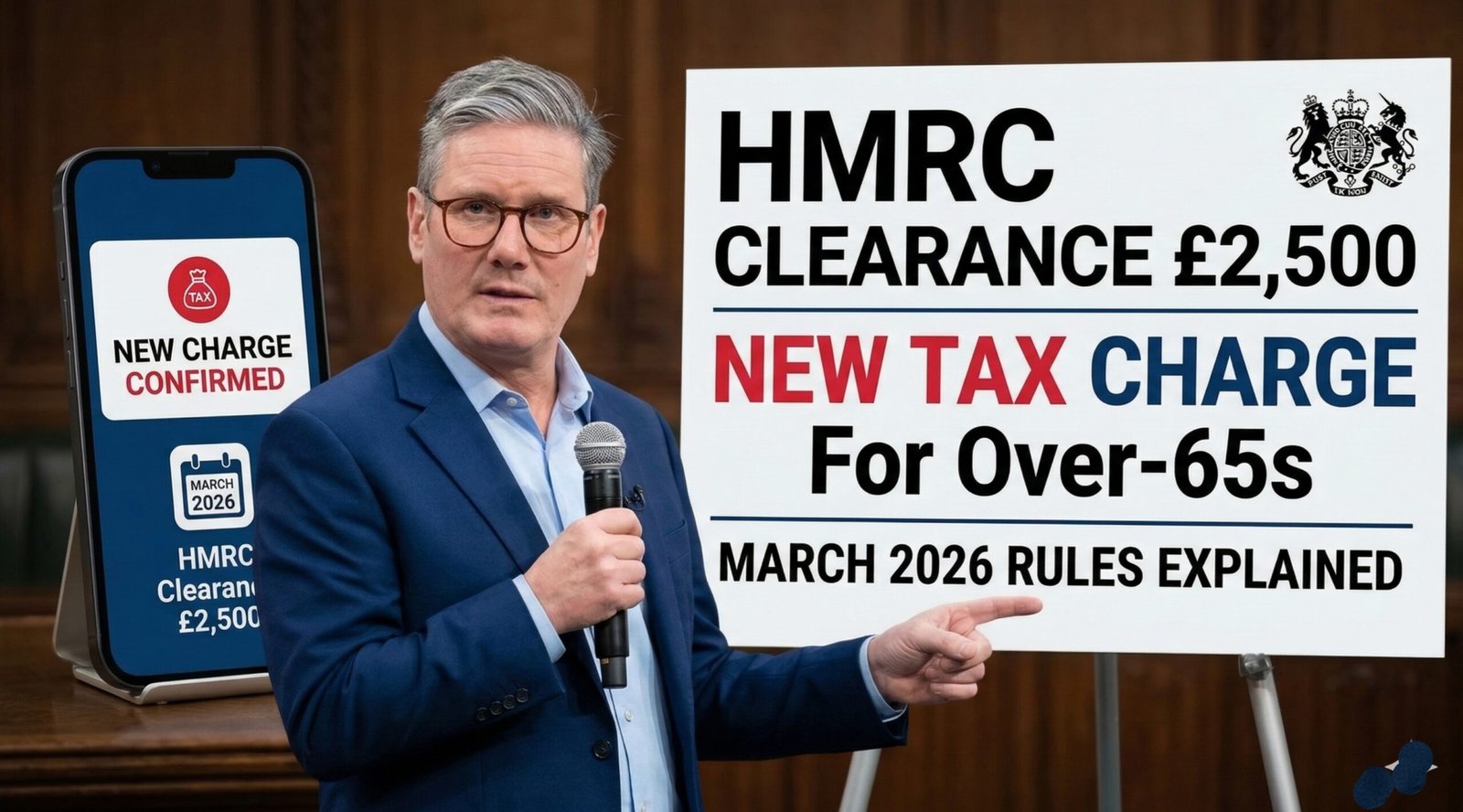
The month of March 2026 has brought a wave of anxiety for the UK’s retirement community as news of a potential “£2,500 new tax charge” begins to circulate. While the headline suggests a single, flat invoice from HM Revenue & Customs (HMRC), the reality is a far more complex web of “fiscal drag,” frozen thresholds, and the unintended consequences of the State Pension “Triple Lock”. For those over the age of 65, understanding these mechanics is essential to protecting their retirement income from an unexpected tax grab.
The truth behind the £2,500 figure
It is important to clarify that HMRC is not issuing a mandatory £2,500 “bill” to every person over 65. Instead, this figure represents the cumulative financial impact of several policy shifts and economic factors that have reached a tipping point this March. For a higher-income retiree—someone who receives a full State Pension alongside a private or workplace pension—the “new” cost in taxes compared to previous years can indeed reach this significant amount.
The charge is essentially a “stealth tax” driven by the fact that while pensions are rising to meet inflation, the tax-free personal allowance has remained stuck at £12,570 since April 2021. As incomes climb past this frozen line, HMRC is naturally entitled to a larger slice of the pie.
The Triple Lock and the tax threshold
The primary driver for this shift is the success of the State Pension Triple Lock. In April 2026, the Full New State Pension is set to rise to approximately £241.30 per week, which totals around £12,547 per year.
This creates a precarious situation: a pensioner receiving the full State Pension now has just £22.40 of their “tax-free” allowance left for the entire year. For anyone with even a small amount of additional income—whether from a part-time job, a small private pension, or interest on savings—every single penny of that extra money is now subject to at least a 20% basic rate tax.
Fiscal drag and the invisible tax hike
Economists refer to this phenomenon as “fiscal drag”. By keeping the personal allowance threshold frozen until at least 2028 (and potentially 2031), the government is effectively pulling millions of retirees into the tax system for the first time.
For a person over 65, the impact is felt most keenly when they draw a lump sum from a Self-Invested Personal Pension (SIPP) or an annuity to cover rising living costs. Because their State Pension has already “used up” the tax-free allowance, HMRC may withhold a much larger chunk of these private withdrawals than the retiree might have expected, fitting the narrative of a heavy “new charge”.
Changes to savings and dividend taxes
The £2,500 figure also takes into account new rules for 2026 regarding income from assets. Starting in April 2026, the tax rates for dividend income are increasing. The dividend ordinary rate will rise to 10.75% for basic rate taxpayers and 35.75% for those in the higher rate bracket.
Many over-65s rely on dividend-paying stocks or modest savings to supplement their pension. With the dividend allowance having been slashed in recent years to just £500, more seniors are finding that their “passive” income is now being taxed at these higher 2026 rates. For those with significant portfolios outside of an ISA, these incremental changes contribute heavily to the total “tax hit”.
UK Ends the 67 Rule – New State Pension Age Officially Approved
HMRC tax code adjustments in March
Many retirees have noticed changes to their tax codes this March, even before the new tax year officially begins in April. This is because HMRC often adjusts tax codes in advance to account for the upcoming State Pension increase.
If your total projected income for the 2026/27 tax year looks set to cross a threshold, your “K code” or “L code” might be adjusted now to ensure you don’t end up with a massive bill at the end of the year. For a pensioner whose income just crosses into the basic or higher rate band, this adjustment can feel like a direct and sudden cut to their monthly take-home pay.
The impact of the “Simple Assessment” system
HMRC is increasingly using a “Simple Assessment” system to collect tax from pensioners whose only significant income is the State Pension. Previously, most pensioners did not have to worry about tax returns because their income was too low.
However, with the State Pension now almost equal to the personal allowance, HMRC will use data from the DWP to calculate the tax owed and send a bill directly to the retiree. This new administrative reality is adding to the feeling of being “targeted” by new charges, as many seniors are receiving tax demands for the first time in their lives.
Why March 2026 is a critical date
March 6, 2026, was a significant date because it marked the point where new DWP and HMRC protocols for recalculating income came into effect. This includes standardised caps on “overpayment recovery”.
In some cases, if a retiree has been found to have received too much Pension Credit or State Pension in previous years due to administrative errors or unreported changes in circumstances, HMRC and the DWP can now deduct significant sums directly from their monthly payments. These “clawbacks” can be as high as £153 per month, which, over the course of a year, accounts for nearly £1,800 of the purported £2,500 total charge.
How the “Fiscal Cliff” affects savings interest
Another often-overlooked factor is the Personal Savings Allowance. Basic rate taxpayers can earn £1,000 in interest tax-free, while higher rate taxpayers only get £500.
Because of fiscal drag, a pensioner who was previously a “basic rate” taxpayer might be pushed into the “higher rate” band (£50,271+) solely because their pension rose while the thresholds stayed the same. If this happens, their savings allowance is instantly cut in half. At current interest rates, this can result in hundreds of pounds of extra tax on savings that were previously protected.
Strategies to mitigate the tax impact
Despite the grim headlines, there are steps over-65s can take to protect their income from these 2026 rules. One of the most effective tools remains the ISA. Any income or capital gains generated within an ISA are completely tax-free and do not count toward your income for tax threshold purposes.
Retirees are also being urged to check if they are eligible for the Marriage Allowance, which allows you to transfer up to £1,260 of your unused personal allowance to your spouse, potentially saving up to £252 a year in tax. Additionally, for those still making occasional pension contributions, the 20% tax relief provided by the government can help offset some of the losses from fiscal drag.
Seeking HMRC clearance and professional advice
For those with complex estates or significant private pension pots, the new “Advance Tax Certainty Service” launching later in 2026 may provide some clarity. While primarily designed for major projects, the move toward “HMRC Clearance” signals a broader push for taxpayers to get their affairs in order before major deadlines.
If you receive a notice from HMRC regarding a new tax code or a Simple Assessment, it is vital not to ignore it. Thousands of retirees successfully challenge their tax codes every year. Consulting with a professional tax advisor or a charity like TaxHelp for Older People can help ensure you aren’t paying a penny more than the law requires.
The long-term outlook for pensioners
The 2026 tax rules are a stark reminder that the “Triple Lock” is a double-edged sword. While it protects the purchasing power of the State Pension, it also relentlessly pushes retirees toward a frozen tax threshold.
With the government forecast to raise an additional £29.3 billion a year by 2027 through these frozen thresholds, the pressure on pensioners is unlikely to ease anytime soon. The £2,500 “charge” discussed this March is not a one-off event; it is the beginning of a new era where most UK pensioners will become active taxpayers.
Managing expectations in a high-tax environment
The UK is currently experiencing its highest tax burden in decades, and the over-65 demographic is no longer exempt from that reality. As we move through 2026, the key for retirees will be “tax literacy”—understanding exactly where their money is going and how to use existing allowances to shield their hard-earned savings.
While the £2,500 headlines are alarming, they serve as a necessary wake-up call. By staying informed about HMRC’s evolving rules and the DWP’s recovery protocols, UK seniors can navigate this difficult financial period with their independence and dignity intact.