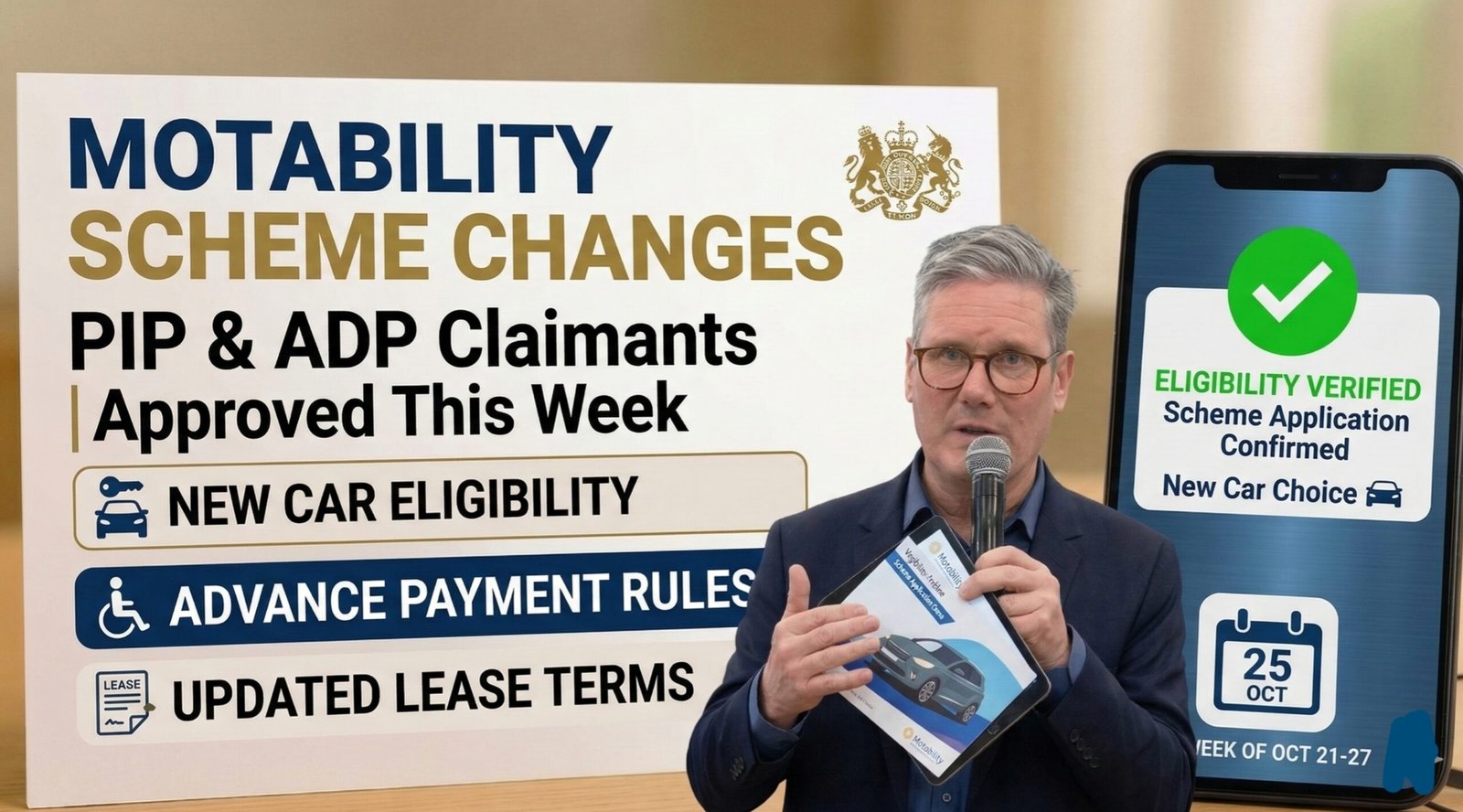
The Motability Scheme has long been a vital lifeline for hundreds of thousands of disabled people across the United Kingdom. However, following the latest government announcements and the approval of new tax measures this week, the landscape for Personal Independence Payment (PIP) and Adult Disability Payment (ADP) claimants is undergoing its most significant transformation in over a decade. While the core mission of providing mobility remains, the financial rules and vehicle choices are shifting as we move toward the April 2026 implementation phase.
Understanding the core tax reforms
The primary driver behind these changes is the government’s decision to reform long-standing tax reliefs. This week, it was officially confirmed that the zero-rate VAT on “Advance Payments”—the upfront cost some claimants pay for higher-spec vehicles—will be scrapped starting July 2026. Instead, a standard 20% VAT will be applied to these top-up payments.
Additionally, the Insurance Premium Tax (IPT) exemption is being removed. For the first time, insurance included in the all-inclusive Motability lease will be subject to a 12% tax. While the Motability Scheme is working hard to absorb some of these costs, they have been honest with claimants: these changes will likely increase the average upfront cost of a vehicle by approximately £400 over a three-year lease.
Protection for wheelchair accessible vehicles
Amidst the news of rising costs, there is a crucial safeguard for the most vulnerable users. The government has confirmed that Wheelchair Accessible Vehicles (WAVs) that have been substantially and permanently adapted will remain exempt from the new 20% VAT on Advance Payments.
This exemption also extends to vehicles adapted for stretcher users, ensuring that those who require complex modifications do not face an unfair financial burden. This protection is a direct result of pressure from disability groups who argued that those with the highest physical needs should not be penalized for requiring larger, more expensive vehicles.
A shift toward practical value over luxury
The new Motability rules approved this week also signal a major change in the types of cars available. In an effort to manage costs and return the scheme to its “original purpose,” several premium brands—including BMW, Audi, and Mercedes-Benz—have been removed from the standard lineup.
The focus has shifted toward practical, reliable, and accessible manufacturers such as Nissan, Toyota, Vauxhall, and Mini. This change is designed to ensure the scheme remains sustainable in the long term while prioritizing vehicles that offer the best value for the taxpayer-funded mobility allowance.
The April 2026 benefit uprating
For PIP and ADP claimants, the financial side of the Motability Scheme is tied directly to their weekly allowance. Starting in April 2026, the Enhanced Rate of the Mobility Component for both PIP and ADP is set to increase to £80.00 per week, up from £77.05 in the previous year.
This increase is designed to help keep pace with inflation, but many claimants worry it won’t be enough to offset the new VAT and insurance taxes. Since the Motability lease typically takes the entire mobility component, this uprating effectively means the “cost” of a lease is rising in line with the benefit increase.
Electric vehicles and home charging support
Despite the tax hikes on petrol and diesel models, the Motability Scheme is doubling down on its commitment to electric vehicles (EVs). Claimants who switch to an EV for the first time can still benefit from a free home charging point and standard installation.
For those who cannot charge at home, the scheme provides access to a subscription-based public charging network. Data released early in 2026 suggests that EV drivers on the scheme can save an average of £225 per year in running costs compared to petrol equivalents, which may help mitigate the impact of the new taxes.
New rules for named drivers and usage
It isn’t just the costs that are changing; the rules regarding who can drive the vehicle are also under scrutiny. The scheme allows for up to three named drivers, which can include family members or carers. However, new guidelines emphasize that the vehicle must be used for the direct benefit of the disabled person.
While the claimant doesn’t always have to be in the car—for example, a carer can use it to go shopping or collect prescriptions—the DWP has indicated that monitoring of “misuse” may increase as part of the broader welfare reforms.
The importance of the price freeze
With so much uncertainty regarding future costs, the Motability “Price Freeze” has become more important than ever. If you order a new vehicle before the July 2026 tax changes take effect, the price you see at the time of application is locked in.
This means that even if the car is delivered after the tax rules change, you will not have to pay the extra VAT or insurance tax on that specific lease. For those nearing the end of their current lease, ordering sooner rather than later could save hundreds of pounds in upfront costs.
Eligibility criteria for PIP and ADP
To join or remain on the Motability Scheme, you must have at least 12 months remaining on your award. The qualifying benefits include the Enhanced Rate of the Mobility Component of Personal Independence Payment (PIP) or the Enhanced Rate of the Mobility Component of Adult Disability Payment (ADP) in Scotland.
The DWP has announced a sweeping review of PIP eligibility criteria, which may affect how people qualify for the mobility component in the future. However, ministers have assured current claimants that no changes will be made to existing awards until the review is fully concluded.
Navigating the new price list
The latest price list features nearly 100 options with no or low Advance Payment, proving that the scheme can still be affordable if you choose the right model. Popular choices like the Nissan Juke, Toyota Yaris Hybrid, and the electric Mini Countryman are still available with £0 upfront cost as of early 2026.
However, for those looking at larger SUVs or long-range electric cars, Advance Payments are starting to climb. Models like the Skoda Enyaq and Hyundai Tucson now frequently carry upfront costs between £749 and £1,499.
What happens to current leases
If you are already in a Motability lease, the good news is that these changes do not affect you immediately. Your current agreement, including the price you paid and the insurance terms, is legally protected until the end of your three-year (or five-year for WAVs) contract.
The new VAT and IPT rules only apply to “new” leases started after the implementation dates. This provides a window of stability for current users, though they will need to prepare for the new financial reality when it comes time to choose their next vehicle.
The role of the Motability Foundation
The Motability Foundation, the charitable arm of the scheme, is playing a bigger role in supporting claimants through these transitions. They provide grants for those who truly cannot afford the Advance Payments for the vehicles they need for their disability.
With the £400 average increase looming, the Foundation is expected to see a surge in grant applications. If you believe the new tax changes will make getting a suitable vehicle impossible, it is worth contacting the Foundation early to discuss your options.
A period of adjustment
The Motability Scheme is entering a period of significant adjustment. While the addition of VAT and Insurance Premium Tax is a setback for many, the scheme remains “great value” compared to private leasing markets.
The focus on electric vehicles, the protection for WAV users, and the 2026 benefit uprating are all pieces of a complex puzzle. For UK claimants, staying informed and planning ahead for the April and July 2026 milestones will be the key to maintaining their independence and mobility in the years to come.