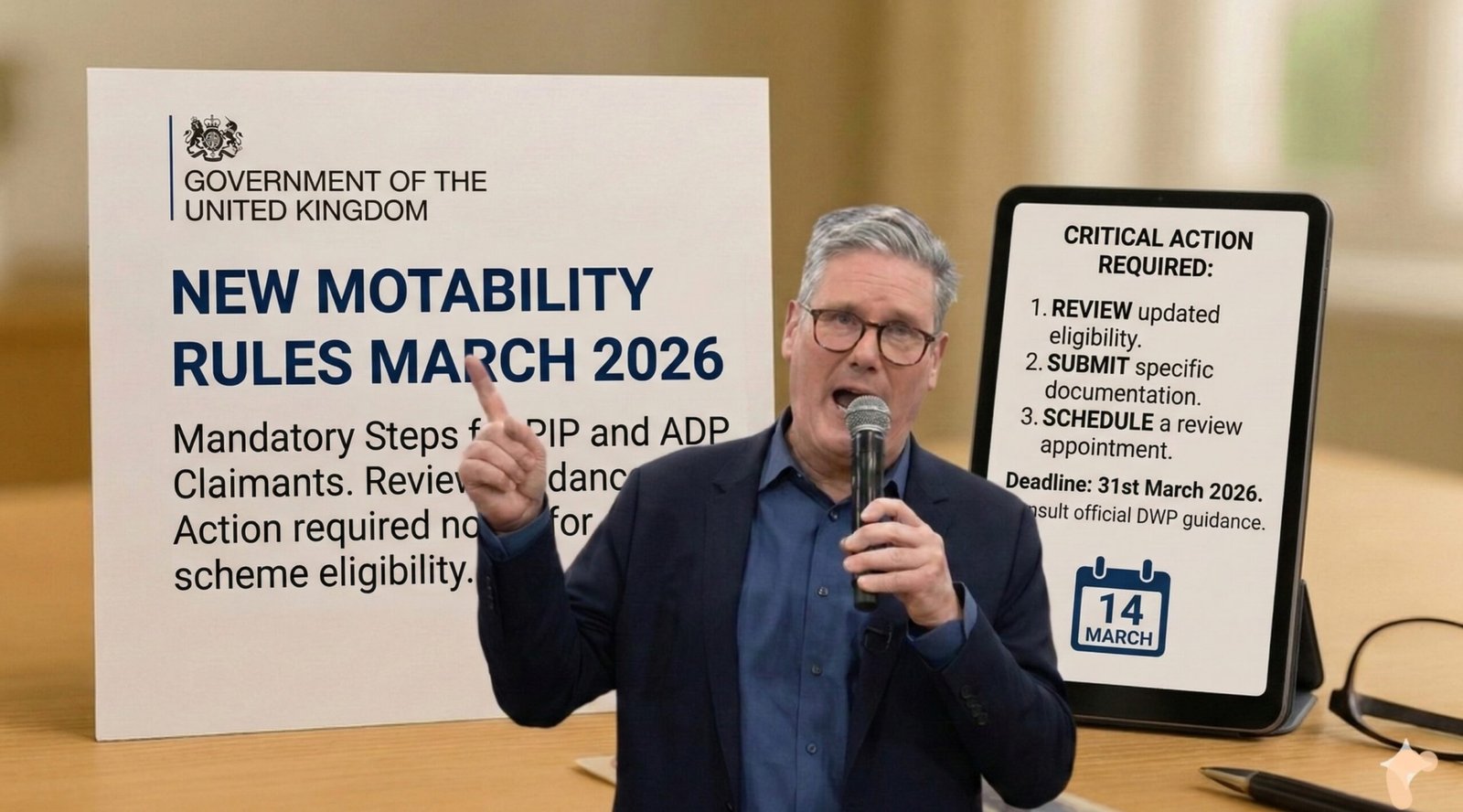
The Motability Scheme, a vital lifeline for millions across the UK, is undergoing its most significant administrative and financial shift in over a decade. As of March 2026, the Department for Work and Pensions (DWP) and Motability Operations have finalized new regulations that will directly impact how Personal Independence Payment (PIP) and Adult Disability Payment (ADP) claimants access and maintain their vehicles. While the core mission of providing mobility remains, the rules regarding vehicle choice, tax exemptions, and digital monitoring have evolved.
For claimants, this is not a period for complacency. Understanding these updates is essential to ensuring you aren’t hit with unexpected costs or lease terminations. Whether you are currently in a lease or looking to start one, here is everything you need to know and the steps you must take right now.
The rise in Advance Payments
One of the most immediate changes users will notice this March involves a significant shift in the “Advance Payment” structure. An Advance Payment is a one-off upfront cost required for larger or higher-specification vehicles that cost more than the standard mobility allowance.
Due to upcoming government changes to tax reliefs, Motability has warned that the average Advance Payment is likely to increase by approximately £400 over a standard three-year lease. Although the full impact of these tax changes—including the removal of zero-rate VAT on top-up payments—won’t be fully implemented until July 2026, pricing for new orders this March is already beginning to reflect these rising operational costs.
Protective measures for wheelchair users
In a vital safeguard for those with the highest physical needs, the government has confirmed that Wheelchair Accessible Vehicles (WAVs) will retain many of their existing protections. Specifically, the 20% VAT that will soon apply to Advance Payments on standard cars will not be added to vehicles that are substantially and permanently adapted for wheelchair or stretcher users.
UK Banks Introduce New Safeguards for Over-67 Cash Withdrawals
This exemption is a critical piece of news for those who require more expensive, larger vehicles to accommodate their equipment. However, for standard SUV or hatchback users, the “luxury” element is being phased out in favor of practical, reliable, and accessible models from manufacturers like Nissan, Toyota, Vauxhall, and Mini.
New digital monitoring and telematics
A major shift in the 2026 rules involves the increased use of “telematics”—a digital monitoring system installed in vehicles. While telematics has been used in the past for specific younger drivers, the scheme is now expanding its use to ensure cars are being used within the strict “Fair Use” policy.
The Motability Scheme allows for up to three named drivers, but it is a strict requirement that the vehicle must be used for the direct benefit of the disabled person. The DWP and Motability Operations are now more closely monitoring usage patterns to identify potential misuse. Violating these terms can lead to an immediate termination of the lease and a permanent ban from the scheme.
The April 2026 benefit uprating
For PIP and ADP claimants, the financial feasibility of a lease is tied directly to their weekly allowance. Starting in April 2026, the DWP has confirmed that disability benefits will rise by approximately 3.8% in line with inflation.
The Enhanced Mobility rate for PIP and ADP is set to increase to £80.00 per week, up from £77.05. While this increase provides a little more breathing room, it is worth noting that a total lease typically “swallows” the entire mobility component. Therefore, the uprating effectively keeps pace with the rising costs of the lease rather than providing extra cash in hand for the claimant.
Enhanced support for electric vehicles
The 2026 rules double down on the transition toward electric vehicles (EVs). Motability has streamlined the process for home charger installations; if you lease your first EV through the scheme, the cost of a home charging point and its standard installation is now fully covered.
For those without off-street parking, the scheme has expanded its access to subscription-based public charging networks. Data released in early 2026 suggests that EV drivers on the scheme can save an average of £225 per year in running costs compared to petrol or diesel equivalents. With over 50 electric models now boasting a range of over 300 miles, the “range anxiety” of previous years is becoming less of a barrier for PIP and ADP claimants.
Named driver rules and carer flexibility
Historically, there were strict geographical limits on where a nominated driver could live in relation to the claimant. The March 2026 update introduces a more common-sense approach, allowing for carers who may live slightly further away to be added to the insurance policy more easily.
However, this flexibility comes with increased scrutiny. The DWP has reiterated that while the claimant does not always have to be in the car—for example, a carer can use it to go shopping for them—the primary purpose must always be the claimant’s mobility and independence. If the car is being used primarily for a named driver’s personal commute to their own job, it is a breach of the rules.
Transitional support for failed assessments
A major point of concern for many is what happens if they lose their “Enhanced Rate” mobility award following a DWP review or the ongoing “Timms Review” into PIP. The 2026 guidance confirms that transitional support remains in place.
If you lose your mobility award, Motability Operations will contact you to discuss your options. Depending on when you joined the scheme, you may be eligible for a financial grant of up to £1,000 if you return the car in good condition within eight weeks of your last allowance payment. Alternatively, you can choose to keep the vehicle for up to 26 weeks with a reduced transitional payment of £500 to help you arrange alternative transport.
The “Price Freeze” and ordering now
If you are nearing the end of your current lease, the single most important thing you can do this March is to look at the new price list immediately. Motability operates a “Price Freeze” policy, which means the price you see when you order is the price you pay, even if the car isn’t delivered until after a future price hike.
With the 20% VAT on Advance Payments and the 12% Insurance Premium Tax (IPT) looming for July 2026, ordering a vehicle now ensures you are locked into the current, lower tax-free rates. For those on a tight budget, nearly 100 options remain with £0 or very low Advance Payments, including popular models like the Mazda 2 Hybrid and the electric Vauxhall Frontera.
Navigating the new vehicle catalog
The 2026 catalog has seen several high-end luxury brands removed to ensure the scheme remains “sustainable and fair for taxpayers”. The focus has shifted back to vehicles that offer the best value for money and the highest levels of accessibility.
Claimants are encouraged to visit their local Motability-accredited dealer this month to test drive these new “priority” models. Many features that previously carried an extra cost—such as specialized steering aids or pedals—have now been moved into the “inclusive” category to reduce the hidden costs of disability.
Real-time data sharing with DWP
In 2026, the administrative link between Motability and the DWP is more seamless than ever. This means that if your benefit award is extended, reduced, or stopped, the information is shared in real-time.
Claimants must ensure that their contact details are up to date with both the DWP and Motability Operations. If you are moving from DLA to PIP or from PIP to the new ADP system in Scotland, you must notify the scheme immediately to avoid any disruption to your lease payments.
A period of stability before July
While March 2026 brings new guidance, the “big hit” from the tax reforms is still a few months away. This provides a vital “window of opportunity” for PIP and ADP claimants. By acting now, you can avoid the £400 average increase in upfront costs and secure a vehicle that meets your needs for the next three years.
The Motability Scheme remains “great value” compared to the private leasing market, but the era of completely “cost-free” luxury leases is coming to an end. The focus for 2026 is on practicality, sustainability, and ensuring that those with the highest needs—particularly wheelchair users—remain protected.
Final checklist for claimants
To stay ahead of the March 2026 changes, every claimant should:
-
Check your lease expiry date: If you are due for renewal in 2026, consider ordering before the July tax changes.
-
Review the £0 Advance Payment list: There are still nearly 100 affordable options available this quarter.
-
Update your named drivers: Ensure your drivers live within a reasonable distance and understand the “Fair Use” rules.
-
Consider the switch to Electric: Take advantage of the free home charger and lower running costs.
-
Verify your benefit award: Ensure you have at least 12 months remaining on your enhanced mobility award.
The Motability Scheme continues to be an essential tool for independence. By following these new rules and being proactive with your lease, you can ensure that you stay mobile and financially secure throughout 2026 and beyond.
Next Step: Would you like me to find the specific list of vehicle models currently available with £0 Advance Payment for this quarter?