The UK’s financial landscape is undergoing a significant transformation in 2026. For millions of workers across the country, the most impactful change comes in the form of the annual “pay rise” mandated by the government. As of April 1, 2026, the new National Minimum Wage and National Living Wage rates have officially come into effect, bringing a much-needed boost to bank accounts during a time of persistent economic pressure.
Whether you are a young person entering the workforce for the first time, an experienced professional over 21, or an apprentice learning a trade, these changes will directly affect your monthly take-home pay. Understanding these rates is not just about knowing your worth; it is about ensuring that your employer is complying with the latest legal requirements.
The Headlines for the 2026 Pay Increase
The headline figure for 2026 is the increase in the National Living Wage (NLW), which applies to workers aged 21 and over. For the first time, this rate has climbed to £12.71 per hour, representing a steady 4.1% increase from the previous year.
This move follows recommendations from the Low Pay Commission (LPC), which has been tasked with keeping the minimum wage aligned with two-thirds of the median hourly earnings in the UK. While 4.1% might seem modest compared to the double-digit jumps of previous years, it reflects a stabilization in the economy while still ensuring that the lowest-paid workers see a real-terms improvement in their standard of living.
A Historic Boost for Younger Workers
While the adult rate has seen a solid rise, the real story of 2026 lies in the “youth rates.” In an effort to narrow the gap between different age groups, the government has authorized a massive 8.5% increase for those aged 18 to 20.
As of April 2026, workers in the 18–20 age bracket are entitled to a minimum of £10.85 per hour. This is a significant shift from just a few years ago, when young adults were paid substantially less than their older colleagues for the same work. The policy goal here is clear: to move toward a “single adult rate” in the future, ensuring that age becomes less of a factor in how much a person earns for an hour of labor.
The Breakdown of 2026 Rates by Category
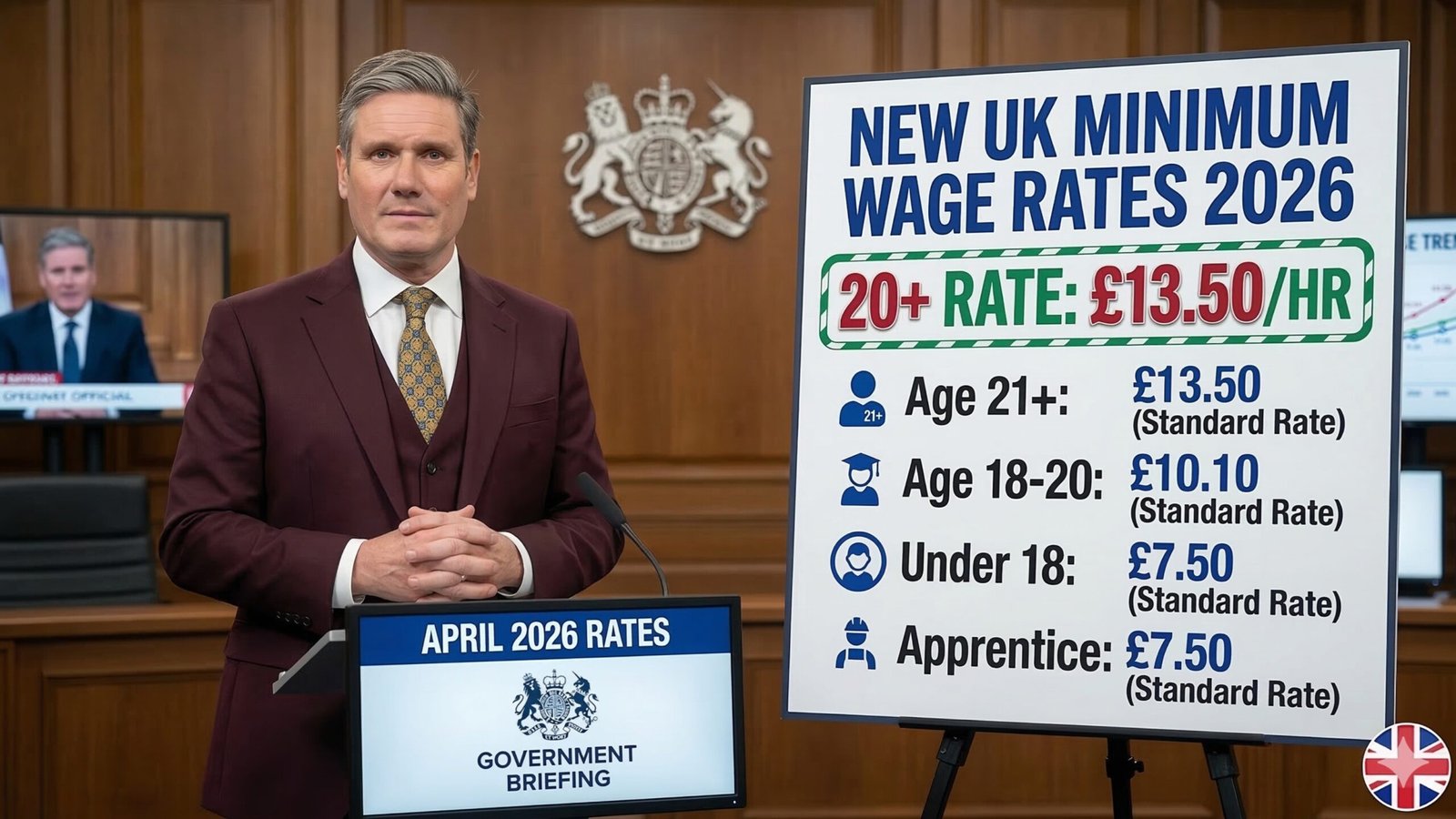
To keep things simple, here is a clear breakdown of the minimum hourly rates that apply across the UK as of April 1, 2026:
-
Aged 21 and over (National Living Wage): £12.71 per hour
-
Aged 18 to 20 (National Minimum Wage): £10.85 per hour
-
Aged 16 to 17 (Young Workers): £8.00 per hour
-
Apprentice Rate: £8.00 per hour
-
Accommodation Offset Rate: £11.10 per day
It is worth noting that the Apprentice Rate applies to those under 19, or those 19 and over who are in the first year of their apprenticeship. If you are an apprentice aged 19 or over and have completed your first year, you are entitled to the full minimum wage for your age group.
Why the Age Categories are Shifting
The UK government has been slowly lowering the age at which the “National Living Wage” kicks in. Just a few years ago, you had to be 25 to receive the top rate. Today, that age is 21. There is growing political pressure to lower this even further to 18, which is why we are seeing such aggressive percentage increases for the 18–20 age group in 2026.
By raising the 18–20 rate to £10.85, the government is making it easier for young people to achieve financial independence. For a full-time worker in this age group, this change adds over £1,600 to their annual gross income compared to 2025. It is a change designed to boost social mobility and encourage more young people into the workforce.
What the 4.1% Increase Means for Your Monthly Budget
For an adult over 21 working a standard 37.5-hour week, the move to £12.71 per hour results in a gross annual salary of approximately £24,784. This is an increase of roughly £975 per year compared to the 2025 rate of £12.21.
After tax and National Insurance (assuming no other income), this leaves the average minimum wage worker with roughly £1,750 per month in their pocket. While this is a step in the right direction, many financial experts point out that the cost of housing and energy continues to swallow a large portion of this increase. It is essential for workers to check their new payslips in April to ensure the adjustment has been applied correctly.
The Rights of Apprentices in 2026
The Apprentice Rate has seen a rise to £8.00 per hour, matching the rate for 16- and 17-year-olds. This is a 6% increase, intended to make vocational training more attractive to school leavers.
However, many apprentices remain unaware of their right to a higher wage once they complete their first year. If you are 21 years old and starting the second year of your apprenticeship in 2026, your employer is legally required to jump your pay from £8.00 all the way to £12.71. This is a massive pay rise that many young people miss out on simply because they don’t know the rules.
How the Accommodation Offset Affects You
For workers who live in accommodation provided by their employer—common in sectors like hospitality, agriculture, and domestic work—the Accommodation Offset is a crucial figure. In 2026, this rate is £11.10 per day.
This is the maximum amount an employer can subtract from your wages if they provide you with a place to live. If your employer is charging you more than this for rent and it brings your hourly pay below the legal minimum wage, they are breaking the law. This rule exists to prevent “truck system” arrangements where employers claw back all of a worker’s wages through inflated housing costs.
The Responsibility of UK Employers
For business owners, the April 2026 rate increases present a logistical and financial challenge. It is no longer enough to just “pay the minimum.” Employers must also factor in the increased cost of employer National Insurance contributions and pension auto-enrolment.
HMRC has become increasingly aggressive in naming and shaming companies that fail to pay the correct rates. Even accidental errors—such as failing to pay for “uniform changing time” or mandatory training—can result in heavy fines and a public reputation hit. Employers are advised to audit their payroll systems well before the April deadline to ensure every age-based trigger is automated.
Is This the Same as the Real Living Wage?
It is important to distinguish between the government’s “National Living Wage” and the Real Living Wage promoted by the Living Wage Foundation. The government’s rate of £12.71 is a legal requirement. The Real Living Wage is a voluntary rate that many ethically-minded employers choose to pay.
In 2026, the Real Living Wage has risen to £13.45 per hour across the UK and £14.80 in London. If you work for one of the 15,000+ accredited Living Wage employers (like IKEA, Aviva, or many local councils), you will likely be earning significantly more than the legal minimum. If you feel your current pay is too low, it may be worth checking if your employer is part of this voluntary scheme.
What to Do if You are Being Underpaid
If April 2026 has passed and your hourly rate has not increased to the correct level for your age, you have several options. First, speak with your manager or HR department; many errors are simply administrative oversights.
If that doesn’t work, you can contact Acas (the Advisory, Conciliation and Arbitration Service) for free, confidential advice. You can also report underpayment to HMRC anonymously. The law is strictly on the side of the worker here—it is illegal for an employer to dismiss you or treat you unfairly for asking to be paid the legal minimum wage.
Preparing for the 2027 Forecast
Looking ahead, the trend for the UK minimum wage is clear: upward. The Low Pay Commission is already looking toward 2027, with early projections suggesting the National Living Wage could move toward the £13.20 mark.
For workers, this means a consistent improvement in the “floor” of the UK economy. For the first time in decades, the gap between the lowest and highest earners in the UK is starting to stabilize, thanks largely to these aggressive annual adjustments. While the cost of living remains a hurdle, the 2026 rates provide a firmer foundation for millions of households to build their financial future.
Final Thoughts on the April Transition
The transition to the 2026 wage rates is a landmark moment for the UK labor market. With the National Living Wage reaching £12.71 and youth rates seeing record-breaking percentage increases, the value of labor is being redefined.
As we move through March and into the new tax year, stay vigilant. Check your payslips, understand your age-related rights, and ensure that you are receiving every penny you are legally entitled to. In 2026, your time is more valuable than ever—make sure your paycheck reflects that.