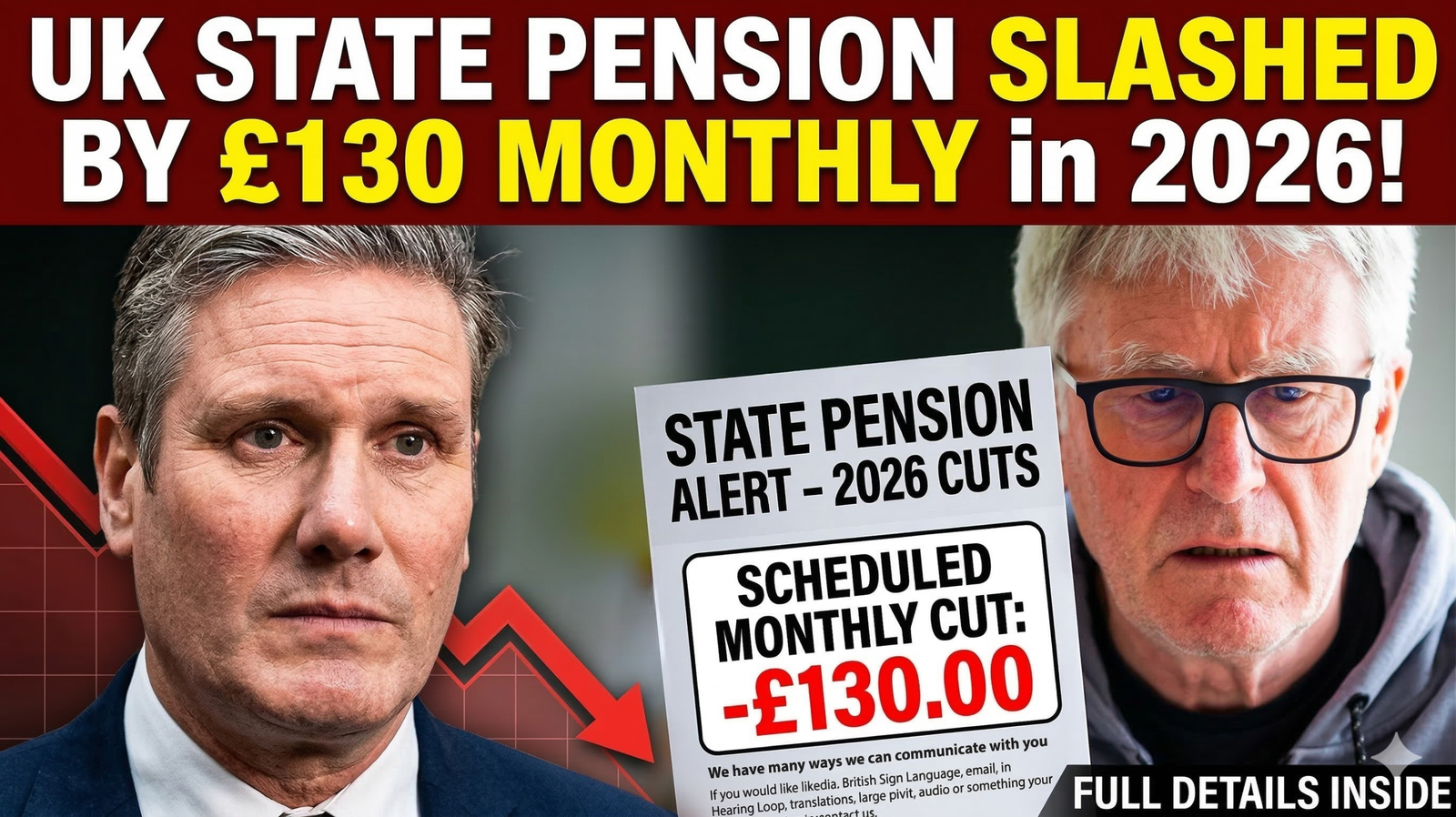
In recent weeks, a wave of anxiety has swept across the UK’s retired population. Headlines suggesting that the State Pension is set to be “slashed by £130 per month” in 2026 have been popping up on social media feeds and news aggregators, leaving millions of pensioners wondering how they will manage their household budgets. In an era where the cost of living remains stubbornly high, even the rumor of a reduction is enough to cause significant distress.
However, when it comes to government benefits and Department for Work and Pensions (DWP) policy, it is vital to separate sensationalist “clickbait” from the actual legislative reality. If you have seen these reports and felt a knot in your stomach, take a deep breath. To understand the truth, we need to dive into the confirmed 2026 rates, the mechanics of the Triple Lock, and where this mysterious £130 figure actually originates.
The Truth About the 2026 Pension Increase
The most important fact to establish is that there is no official DWP policy to “cut” the base rate of the State Pension. In fact, the opposite is happening. Under the current Triple Lock guarantee, the State Pension is legally required to rise every April.
For the 2026/27 tax year, which begins on April 6, 2026, the DWP has confirmed a 4.8% increase in payments. This increase was determined by the Average Weekly Earnings (AWE) growth figures, which outpaced both inflation and the 2.5% minimum floor.
Here is what the confirmed rates look like for April 2026:
-
Full New State Pension: Rising to £241.30 per week (up from £230.25). This is an annual boost of roughly £575.
-
Full Basic State Pension: Rising to £184.90 per week (up from £176.45). This is an annual increase of approximately £440.
As you can see, the base payments are going up, not down. So, why are people talking about a £130 monthly loss?
De-coding the £130 Monthly “Reduction”
The figure of £130 per month (which totals £1,560 per year) does not represent a direct cut to your weekly pension check. Instead, it is a “theoretical loss” derived from complex fiscal modeling and recent changes to secondary benefits.
There are three main reasons why this £130 figure is circulating:
-
The Loss of the Winter Fuel Payment: For many years, the Winter Fuel Payment was a universal benefit worth up to £300. Recent policy changes mean that only those on Pension Credit or other means-tested benefits will now receive it. For a pensioner who no longer qualifies, this is a direct loss of income.
-
Fiscal Drag and the Tax Trap: The Personal Allowance (the amount you can earn before paying tax) is frozen at £12,570 until 2028. Because the State Pension is rising, many pensioners are being pushed into the 20% tax bracket for the first time. If you have a small private pension or savings interest, you might see a “reduction” in your take-home pay because HMRC is taking a slice of it.
-
The “Triple Lock Plus” Debate: During recent political discussions, there were proposals to increase the tax-free allowance specifically for pensioners. Since these were not implemented as originally hoped, some analysts have calculated that the “missing” tax relief, combined with lost fuel benefits, equates to a roughly £130 per month deficit compared to what a pensioner’s “real-world” purchasing power used to be.
How Fiscal Drag Acts as a Stealth Cut
While your DWP payment will technically be higher in 2026, the “stealth tax” known as fiscal drag is the closest thing to a real-world cut.
By April 2026, the full New State Pension will reach £12,548 per year. This leaves a tiny gap of just £22 before you hit the tax-free limit of £12,570. If you receive just £2 a month in interest from a savings account or have a tiny “village” pension from a former employer, you are now a taxpayer.
For a retiree who has never had to deal with HMRC before, seeing 20% of their additional income disappear can certainly feel like a “slash” in their expected wealth. When you combine the tax you pay with the fact that prices in shops have risen faster than the pension, the “effective” value of your money may have dropped, even if the number on your bank statement has gone up.
The Role of Pension Credit in 2026
If you are genuinely worried about a shortfall in your income, the most important tool at your disposal is Pension Credit. This benefit is designed specifically to prevent pensioners from falling below a certain standard of living.
In April 2026, the Standard Minimum Guarantee for Pension Credit is also rising:
-
Single Pensioners: Guaranteed income will rise to £238.00 per week.
-
Couples: Guaranteed income will rise to £363.25 per week.
Crucially, Pension Credit is the “golden key” that unlocks other support. If you qualify for even £1 of Pension Credit, you are automatically eligible for the Winter Fuel Payment, help with Council Tax, and potentially a free TV license if you are over 75. If you feel like you are “losing” £130 a month, checking your Pension Credit eligibility is the first step to reclaiming that lost ground.
Why Your NI Record Matters More Than Ever
Another reason a pensioner might see a lower-than-expected payment is a gap in their National Insurance (NI) record. To get the full £241.30 per week in 2026, you generally need 35 qualifying years.
HMRC and the DWP have recently extended the deadline for pensioners to “plug the gaps” in their records going back to 2006. If you have fewer than 35 years, your pension is pro-rated. Someone with only 25 years of contributions will receive significantly less than the headline figure. If you are seeing “cuts” in your forecast, it may be because of these missing years rather than a change in government policy.
The Impact of the 2026 State Pension Age Shift
It is also worth noting that for those approaching retirement, the goalposts are moving. In 2026, we see a continuation of the transition toward a State Pension age of 67.
For individuals born between April 1960 and March 1961, their eligibility dates are shifting. If you were expecting to retire at 66 and now have to wait several more months, you are effectively “losing” thousands of pounds in potential payments. While this isn’t a monthly cut for existing pensioners, it represents a significant reduction in lifetime pension wealth for the next generation of retirees.
Managing the “New Normal” of Pensioner Taxes
If you are one of the millions who will become a taxpayer in 2026 due to the pension increase, there are ways to protect your income.
-
Utilize ISAs: If you have savings that are generating taxable interest, moving them into an ISA can keep that income “invisible” to HMRC.
-
Check Your Tax Code: When your pension increases, HMRC often issues a new tax code (like 1257L). Ensure this is correct. If they think you are earning more than you actually are, they will deduct too much tax at source.
-
Marriage Allowance: If you are married and one of you has a very low income while the other is just over the tax threshold, you may be able to transfer a portion of your Personal Allowance to reduce the overall tax bill.
Final Verdict: Is the Cut Real?
To summarize, the headline “State Pension to be Slashed by £130 Monthly” is misleading. There is no direct reduction in the amount of money the DWP will send to your bank account in April 2026. In fact, you will likely see a pay rise of about £11 per week (for the New State Pension).
The “loss” people are feeling is real, but it is caused by the removal of the Winter Fuel Payment for many and the taxation of pension increases. It is a reduction in purchasing power and supplementary benefits rather than a cut to the pension itself.
Navigating the UK’s retirement system requires looking past the scary headlines and focusing on the official DWP uprating letters. By staying informed about tax thresholds and checking your eligibility for credits, you can mitigate the impact of these changes and ensure you are receiving every penny you are entitled to.