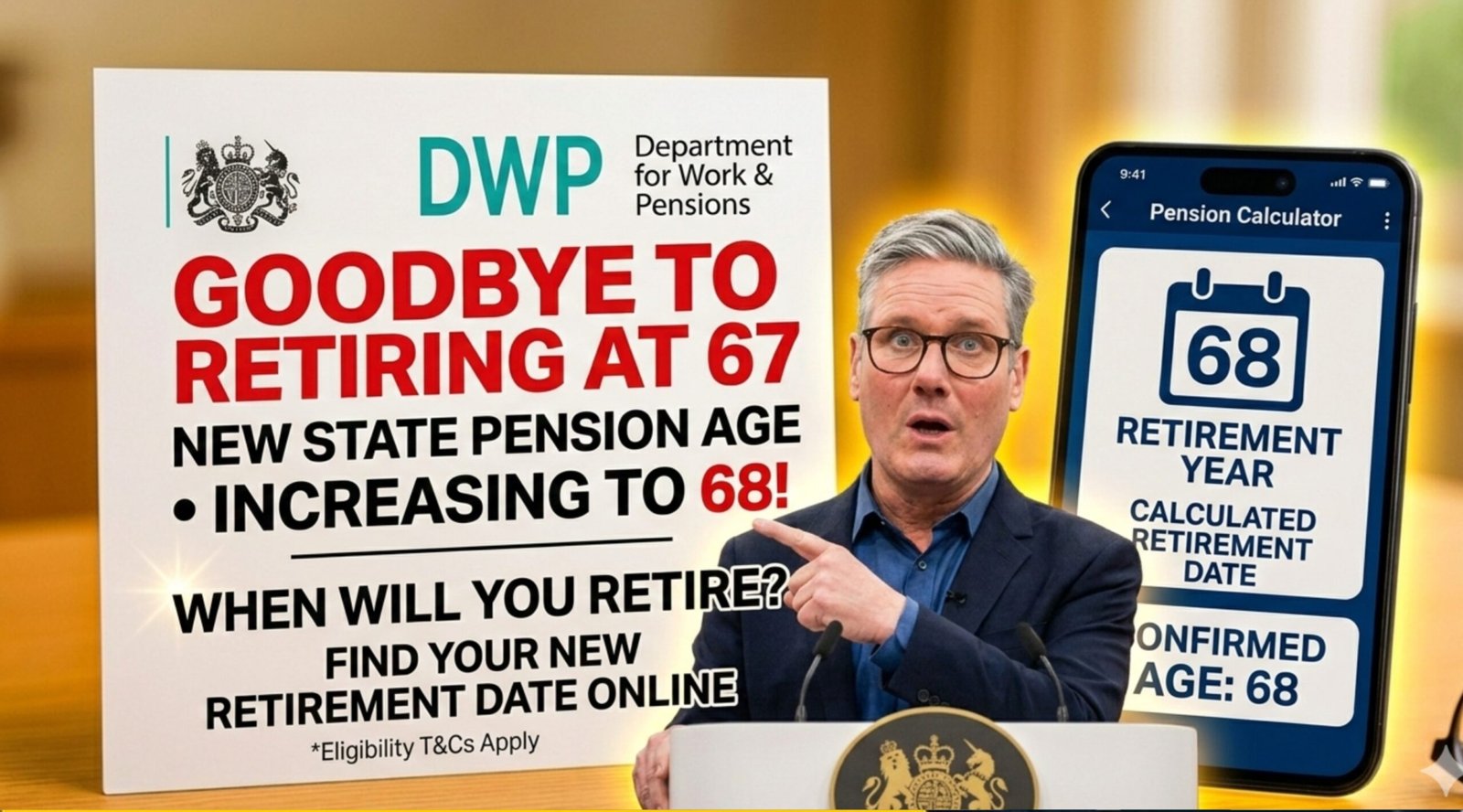
The dream of hanging up the professional hat at 67 is beginning to flicker for millions of workers across the United Kingdom. Recent discussions within Westminster and independent demographic reviews suggest that the goalposts for the State Pension age are not just moving—they are accelerating. For a generation already grappling with a cost-of-living crisis and a volatile housing market, the prospect of working into their late 60s or even 70s is no longer a distant “what if,” but a looming reality.
Understanding these changes is about more than just tracking a number on a government website. It is about how we plan our lives, how we view our health, and how we redefine the very concept of “golden years.”
Why the State Pension Age is Changing
The fundamental driver behind the rising pension age is a simple, albeit harsh, mathematical reality: we are living longer, but the birth rate is not keeping pace. When the State Pension was first introduced, the number of years spent in retirement was relatively short. Today, with medical advancements and better living standards, many retirees expect to spend two or even three decades drawing from the public purse.
The government argues that to keep the system “fair and sustainable” for future generations, the age at which one can claim must rise. If the age remains static while life expectancy climbs, the financial burden on the working-age population—who fund current pensions through National Insurance—becomes unsustainable.
The Current Roadmap to 67 and Beyond
As it stands, the State Pension age is already scheduled to rise to 67 between 2026 and 2028. This change is already “baked in” to the current legislation. However, the real conversation is centered on what happens next. Current law dictates a rise to 68 between 2044 and 2046, but there is intense pressure and ongoing reviews suggesting this should be brought forward to the late 2030s.
For those born in the 1970s and 1980s, the uncertainty is palpable. A shift of just one or two years might seem minor on paper, but in the context of a working life, it represents thousands of hours of additional labor and a significant delay in accessing hard-earned financial security.
The Impact of the Cridland Review
The Cridland Review, an independent assessment of the State Pension age, has been a pivotal document in this debate. It suggested that no more than one-third of an adult’s life should be spent in retirement. As life expectancy data fluctuates, this “one-third” rule becomes the primary lever for policy change.
While recent data suggests that the rate of increase in life expectancy has slowed down—partly due to the long-term impacts of the pandemic and health inequalities—the government remains focused on the long-term fiscal gap. This creates a tension between statistical trends and the lived reality of the British public.
How This Affects Different Generations
The impact of a rising pension age is not felt equally across the board. Generation X is currently in the “crosshairs,” as they are the first group likely to see the jump to 68 happen sooner than originally planned. For Millennials and Gen Z, the State Pension age is becoming an increasingly abstract concept, with many financial advisors suggesting they plan as if the age will be 70 or higher.
This shift necessitates a massive change in mindset. Younger workers can no longer rely solely on the State Pension as their primary source of income. It is moving from being a “foundation” of retirement to a “supplement” that arrives much later than expected.
The Problem of Healthy Life Expectancy
One of the most significant criticisms of raising the pension age is the disparity between life expectancy and healthy life expectancy. While we might be living longer, we aren’t necessarily staying healthy for longer. In many parts of the UK, particularly in disadvantaged areas, people begin to develop chronic health issues in their early 60s.
For a manual laborer in the North of England or a frontline NHS worker, the idea of working until 68 is physically daunting. If a person is too unwell to work but too young to claim their pension, they fall into a “pension gap,” often forced onto less generous disability or unemployment benefits.
The Gender Pension Gap Complication
Women in the UK often face a double disadvantage when the State Pension age rises. Historically, women have had smaller private pension pots due to career breaks for caregiving and the persistent gender pay gap. When the State Pension age increases, it hits those who rely on it most heavily.
We saw the fallout of this with the WASPI (Women Against State Pension Inequality) campaign, where women born in the 1950s felt they were not given sufficient notice of changes to their retirement age. The current discussions must handle communication better to avoid leaving another generation of women in financial limbo.
Private Pensions vs State Pension
With the State Pension becoming a moving target, the importance of private and workplace pensions has never been higher. The introduction of Auto-Enrolment has been a success in getting more people to save, but the minimum contribution levels are often cited by experts as being too low to provide a comfortable lifestyle.
If the State Pension age hits 68 or 69, the private pension age (currently 55, rising to 57 in 2028) becomes the “bridge.” People are increasingly looking to their private savings to allow them to retire earlier than the government says they can. However, this is a luxury only available to those with the disposable income to save aggressively.
The Shift Toward Phased Retirement
The traditional “cliff-edge” retirement—where you work full-time on Friday and are retired on Monday—is dying out. In response to the rising State Pension age, more UK workers are opting for “phased retirement.” This involves moving to part-time hours or consultancy roles in their 60s.
Employers are also having to adapt. With a shrinking pool of younger workers and a more experienced older workforce, businesses are beginning to value “un-retirement.” Flexible working is no longer just for parents; it is becoming a vital tool for older employees who want to keep earning without the burnout of a 40-hour week.
Financial Planning in an Uncertain Era
How do you plan for a future when the rules of the game keep changing? The first step is regular engagement with your “State Pension Forecast” on the government website. Knowing your expected date and the amount you are on track to receive is crucial.
Secondly, diversifying your retirement income is essential. This includes maximizing employer matches in workplace pensions, utilizing ISAs for tax-free growth, and, where possible, reducing debt—especially mortgages—before entering your 60s. The less you “need” the State Pension the moment it becomes available, the more control you have over your life.
The Role of Property in Retirement
For many in the UK, their home is their biggest asset. We are seeing a rise in “downsizing” not just as a lifestyle choice, but as a financial necessity to fund the years between stopping work and receiving the State Pension. Equity release is also becoming more mainstream, though it remains a complex and sometimes risky financial move.
However, for the increasing number of “Generation Renters” who will reach retirement without owning their home, the rising pension age is a terrifying prospect. Without the security of a paid-off mortgage, the State Pension alone will likely be insufficient to cover rising rental costs in old age.
The Political Risk of Pension Reform
Any government that touches the State Pension age is playing with fire. Older voters are the most likely demographic to turn out at the polls. This is why we often see “kicking the can down the road” when it comes to final decisions on pension increases.
However, the fiscal reality is that the “Triple Lock”—the guarantee that pensions rise by the highest of inflation, earnings, or 2.5%—is incredibly expensive. There is a quiet consensus among economists that either the Triple Lock must go, or the pension age must continue to rise. Politicians are currently choosing the latter as the “lesser of two evils.”
Rethinking Work and Longevity
Perhaps the most profound impact of these changes is a cultural one. If we are to work until 68 or 70, we need to rethink how we approach our careers in our 40s and 50s. Lifelong learning and mid-life “career resets” will become the norm.
The UK government has started discussing “mid-life MOTs,” encouraging workers to assess their health, skills, and finances. Instead of viewing the rise in pension age as a loss of leisure, there is an attempt to frame it as an extension of a meaningful, contributing life—though this narrative is a hard sell to those in grueling or unfulfilling jobs.
What to Expect in the Next Ten Years
In the coming decade, we should expect more clarity—and likely more disappointment—regarding the jump to 68. The government will continue to monitor “life expectancy at birth” and “life expectancy at 65” as their primary metrics. If these numbers show even a slight upward tick, the acceleration of the pension age is almost guaranteed.
We may also see the introduction of more “flexible” pension options, such as receiving a lower amount earlier or a higher amount if you defer. These choices already exist to an extent, but they will likely be moved to the forefront of retirement planning conversations.
Final Thoughts on the New Retirement Reality
The era of retiring at 65 is firmly in the rearview mirror, and 67 is quickly becoming the new baseline. While the government’s move to increase the State Pension age is rooted in economic necessity, it ignores the deep-seated inequalities in health and wealth across the UK.
For the individual, the message is clear: the State Pension is a safety net, not a recliner. The more you can do now to take control of your private savings, maintain your health, and stay adaptable in the workplace, the less power the shifting State Pension age will have over your future happiness.
The “Goodbye to 67” isn’t just a headline; it’s a call to action for every worker in the UK to redefine what their later years will look like, on their own terms rather than the government’s.