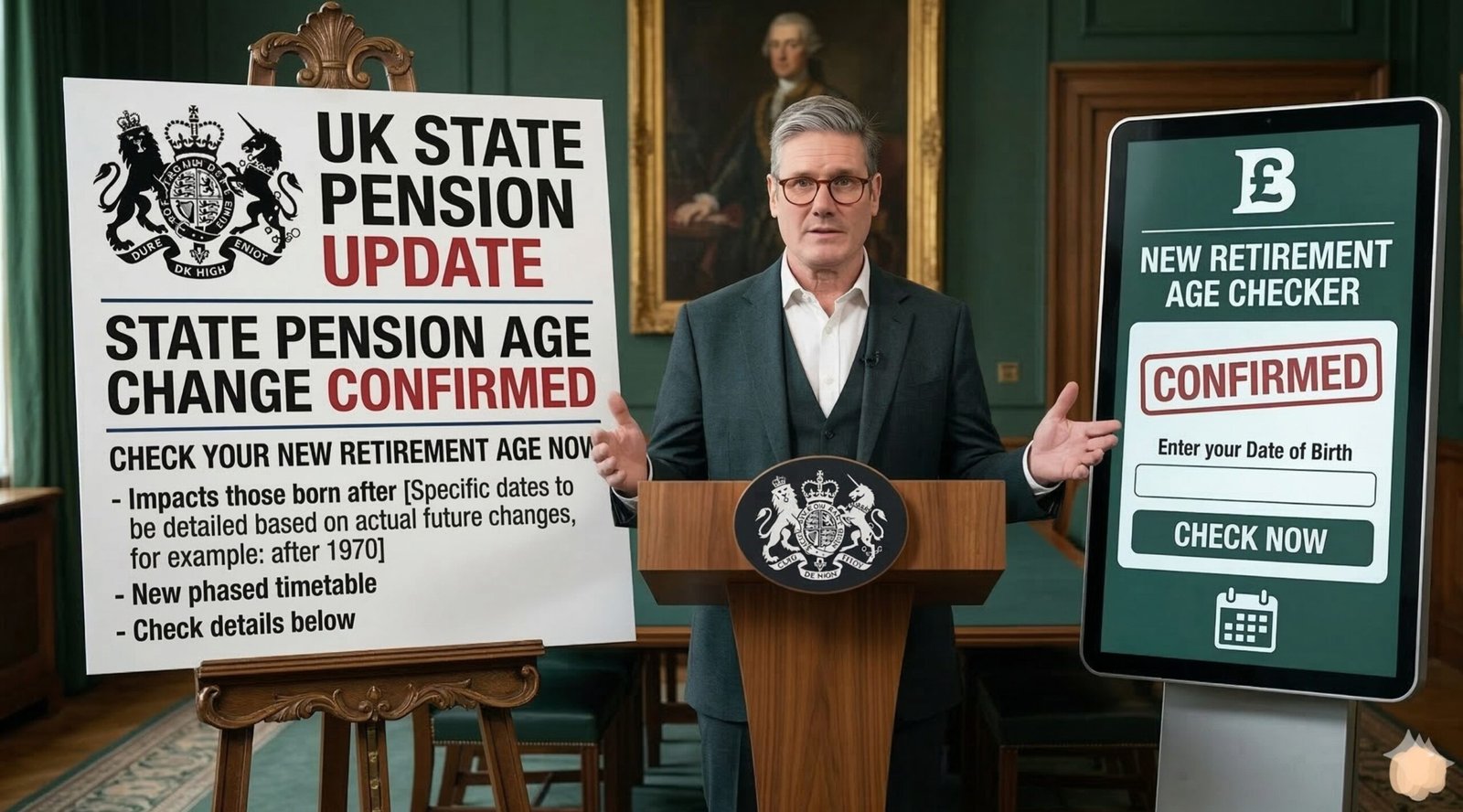
For many people in the UK, the State Pension is the bedrock of their retirement planning. It provides that essential safety net that allows us to step back from the workforce and enjoy our later years. However, the rules surrounding when you can actually claim this money are shifting. As we move through 2026, a significant legislative change is beginning to take effect, moving the goalposts for millions of workers born in the 1960s.
If you have been keeping an eye on the news, you might have seen conflicting reports about whether the retirement age is going up, staying the same, or being delayed. It is a confusing time, but the Department for Work and Pensions (DWP) has been working to clarify exactly who is affected and when. Understanding your “new” retirement age isn’t just about a date on a calendar; it’s about having the time to adjust your savings, your career plans, and your expectations for the future.
The Move from 66 to 67 Explained
The most significant update for 2026 is the commencement of the phased increase in the State Pension age from 66 to 67. This isn’t a sudden jump that happens overnight for everyone, but rather a gradual transition designed to be fairer to those caught on the cusp of the change. Under the Pensions Act 2014, the government accelerated the timeline for this increase, and we are now at the point where those first impacts are being felt.
Starting from April 6, 2026, the age at which you can claim your pension begins to climb. For decades, age 65 was the standard, which then rose to 66 for both men and women by 2020. Now, the trajectory is firmly set toward 67. The reason cited by successive governments is simple: we are, on average, living longer than previous generations. To keep the pension system sustainable without drastically increasing taxes on the current workforce, the government has decided that people need to wait a little longer to access their state funds.
Who is Affected by the 2026 Shift
The group of people currently in the “danger zone” for these changes are those born in the early 1960s. Specifically, if you were born between April 6, 1960, and March 5, 1961, your retirement date is no longer your 66th birthday. Instead, it is your 66th birthday plus a specific number of months.
For example, if you were born in the summer of 1960, you might find that you have to wait an extra four or five months compared to someone born just a year earlier. While a few months might not sound like a long time, for someone who has a physically demanding job or who has been counting down the days to retirement, it can feel like a significant delay. If you were born on or after March 6, 1961, the rules are even clearer: your State Pension age is now officially 67.
Why the Timetable is Phased
The DWP uses a “staircase” approach to these increases to avoid a “cliff edge” scenario. In the past, sudden changes to pension ages caused significant financial hardship, particularly for women who saw their retirement age jump from 60 to 66 in a relatively short window. By phasing the increase to 67 over a two-year period (between 2026 and 2028), the government aims to give people at least some notice.
The phase-in works by adding months to the retirement age based on your month of birth. Someone born in May 1960 might retire at 66 and one month, while someone born in October 1960 would retire at 66 and seven months. This granular approach ensures that no two people born just a few weeks apart have a radically different experience, though it does mean everyone needs to check their specific date using the official government calculator.
The Impact on Your Retirement Income
The delay in reaching the State Pension age doesn’t just mean working longer; it also means a potential gap in your income. If you had planned to stop working at 66 but now cannot claim your pension until 66 and eight months, you need to account for those missing months of income. At current 2026 rates, where the New State Pension is roughly £241.30 per week, an eight-month delay represents a “loss” of over £8,000 in expected payments.
For many, this means either staying in employment longer than planned or dipping into private pension pots earlier than intended. This is why the 2026 update is so critical for those in their early 60s. It is the time to look at your “defined contribution” or “defined benefit” workplace pensions and see if they can bridge the gap created by the shifting state retirement age.
How to Check Your New Retirement Age
Fortunately, the government provides a very straightforward tool to help you find your exact date. By searching for “Check your State Pension age” on the GOV.UK website, you can enter your date of birth and get an immediate answer. This tool is updated in real-time to reflect any legislative changes, so it is the most reliable source of truth.
In addition to your age, the tool will also tell you your “Pension Forecast.” This is arguably more important than the age itself. It shows you how many “qualifying years” of National Insurance (NI) contributions you have. To get the full New State Pension in 2026, you generally need 35 years. If you find you are short, you might be able to pay voluntary contributions to fill the gaps, which can be a very smart move if you are being forced to wait longer to retire anyway.
Will the Age Rise to 68 Sooner
One of the biggest rumors circulating in 2026 is that the jump to age 68 will be brought forward. Currently, the law states that the State Pension age will rise to 68 between 2044 and 2046. However, several independent reviews have suggested that this should happen much sooner—perhaps as early as the mid-2030s—to save the Treasury billions of pounds.
For now, the government has been hesitant to confirm an earlier rise to 68. They have committed to a “ten-year notice” rule, meaning they shouldn’t change the retirement age for anyone who is within a decade of reaching it. For those currently aged 55 and over, the move to 68 is unlikely to affect you. However, for those in their 40s and younger, the prospect of working until 68 (or even 70) is a very real possibility that needs to be factored into long-term financial plans.
The Role of Health and Life Expectancy
The entire justification for raising the pension age is based on life expectancy data. Interestingly, recent data has shown that the rapid rise in life expectancy seen in the 20th century has started to level off in the UK. This has led to intense political debate. If we aren’t living as much longer as previously predicted, is it fair to keep raising the retirement age?
Campaign groups often point out that “healthy life expectancy” is actually falling in some parts of the UK. While someone in an affluent part of the country might easily work until 67, someone in a manual labor role in a less wealthy area might struggle with health issues by their early 60s. This regional inequality is one reason why there are calls for a more flexible pension system that accounts for the type of work people do and their personal health status.
Bridging the Gap with Private Pensions
If the 2026 changes mean you are facing a year or two of waiting that you hadn’t planned for, your private or workplace pension is your best friend. Unlike the State Pension, most private pensions allow you to start taking your money from age 55 (rising to 57 in 2028).
If you have a “Defined Contribution” pot, you could potentially take a small income from it to cover the period between your 66th birthday and your new State Pension age. However, you must be careful not to deplete your private savings too early, as you may need that money later in life when the State Pension alone isn’t enough to cover rising care costs.
What the 2026 Update Means for Younger Workers
If you are nowhere near retirement, you might think the 2026 update doesn’t matter to you. In reality, it sets a precedent. Every time the government successfully moves the retirement age, it becomes easier to do it again in the future. The 2026 shift to 67 is a signal to everyone under the age of 50 that the “traditional” retirement at 65 is a thing of the past.
The best advice for younger workers is to treat the State Pension as a “bonus” rather than a primary source of income. By maximizing your workplace pension contributions now, you give yourself the freedom to retire whenever you want, regardless of what the government decides the official age should be in 2040 or 2050.
Final Steps to Take Today
The “confirmed” update for 2026 is a call to action. Whether you are 64 and preparing to retire or 44 and just starting to think about it, there are three things you should do right now:
-
Check your date: Use the GOV.UK calculator to find your exact State Pension age.
-
Get a forecast: See how much you are likely to get and if you have any NI gaps to fill.
-
Review your private pots: Ensure your personal savings are on track to support you if you decide you don’t want to wait until 67 to stop working.
Retirement should be a time of peace, not a time of bureaucratic stress. By staying informed about these DWP changes, you can take control of your timeline and ensure that when you do finally hang up your hat, you are doing it on your own terms.