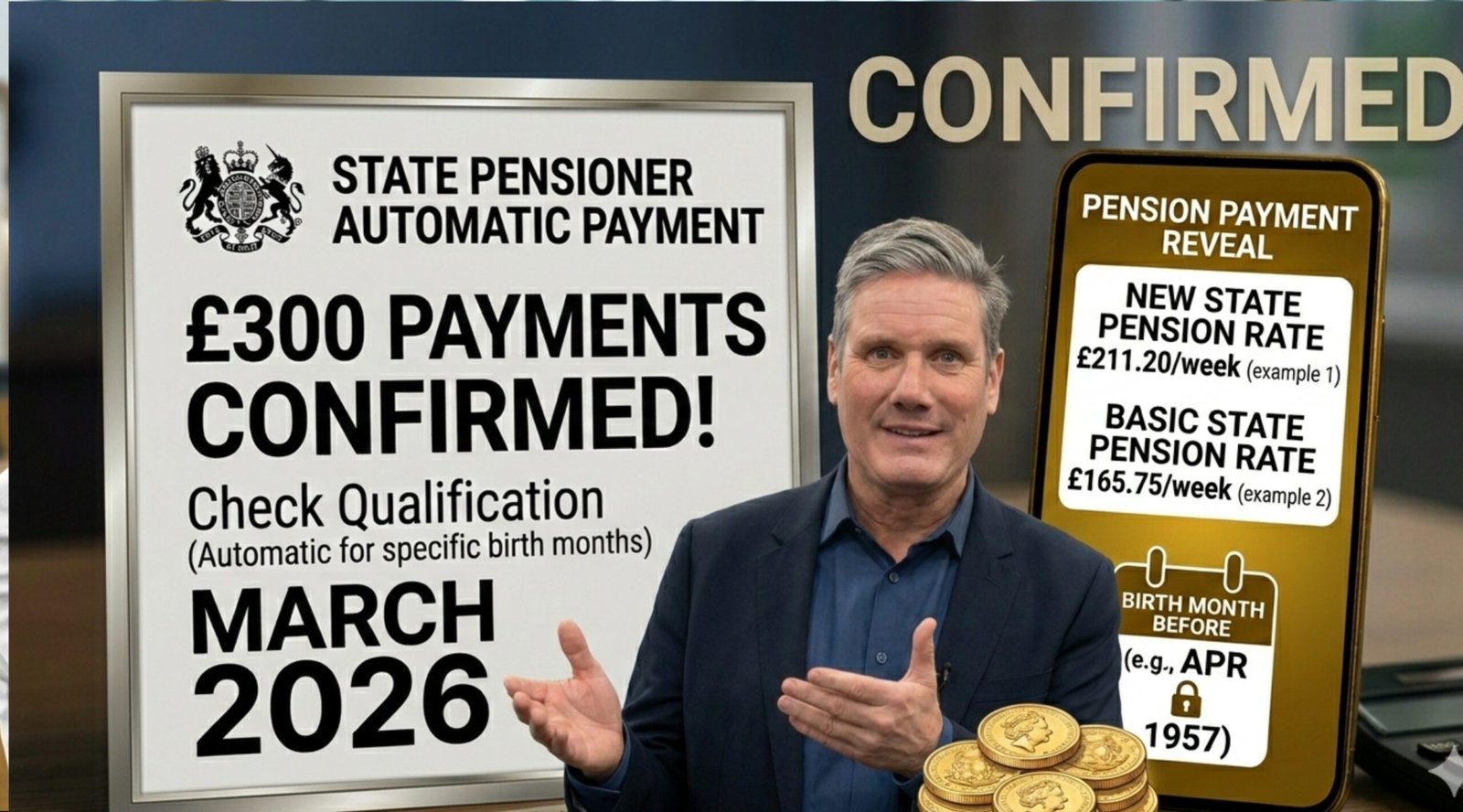
As we move through the early months of 2026, many UK retirees are keeping a close watch on their bank statements for a specific boost in their household budget. The Department for Work and Pensions (DWP) has confirmed that a significant group of state pensioners will receive an automatic payment of up to £300 to assist with the ongoing pressures of seasonal costs. Unlike some other benefits that require a mountain of paperwork, this particular fund is designed to hit accounts without the need for a manual claim, provided you meet certain age and residency criteria.
The focus on those born before a specific month is part of the government’s tiered approach to support. By using birth dates as a primary filter, the DWP can streamline the distribution of funds to the oldest members of society first, who often face the highest heating and living costs. Understanding where that “cutoff line” sits is essential for every pensioner looking to verify their eligibility this month.
The significance of the 1945 birth date
To qualify for the full £300 automatic payment in the current cycle, the DWP looks at whether a pensioner was born before September 22, 1945. This date is not arbitrary; it marks the threshold for those who are aged 80 or over during the qualifying period. The government recognizes that as citizens reach their eighties, their physiological need for a warmer home environment increases, often leading to higher-than-average energy consumption.
If you were born before this date, you are placed into the highest bracket for support. For those born after September 1945 but before September 1959, the payment is usually adjusted to £200. This tiered system ensures that while millions receive help, the most substantial financial aid is directed toward the eldest generation. If your birthday falls before that September 1945 milestone, the DWP’s automated systems should have already flagged your account for the top-tier payment.
How the automatic payment system works
One of the most common questions pensioners ask is whether they need to fill out a form to get this money. For the vast majority of people, the answer is a resounding no. The DWP uses a “qualifying week” system, which usually takes place in the preceding September. If you were living in the UK and were of the required age during that specific week, your details are pulled from the State Pension database.
The money is then sent directly to the same bank or building society account where you receive your regular State Pension. You should see the transaction appearing with a specific reference code, often related to “Winter Fuel” or “DWP WFP,” depending on your bank’s display settings. This automation is designed to prevent the “non-take-up” issues that plague other benefits, ensuring that even those who are not tech-savvy receive the support they deserve.
Eligibility for those living with others
The amount you receive can change based on your living situation. If you were born before September 22, 1945, and you live alone (or no one else in your house qualifies), you will get the full £300. However, if you live with another person who also qualifies for the payment, the total amount is often shared or adjusted.
For example, if two people in a household are both over 80 and both qualify, they might receive £150 each. If one is over 80 and the other is younger but still eligible, the person over 80 still receives a higher portion. The DWP’s goal is to ensure that the total “household” support remains fair while acknowledging that shared living costs like heating are slightly lower per person than for someone living in total isolation.
The role of Pension Credit in eligibility
While age is a major factor, the DWP has recently tightened the link between these payments and means-tested benefits. For many, receiving Pension Credit is now the primary “passport” to ensuring these payments remain automatic. Pension Credit is a top-up for those on a low income, and it acts as a signal to the DWP that the household is in need of maximum support.
If you are over 80 and receive Pension Credit, your £300 payment is essentially guaranteed. If you are not on Pension Credit but your income is relatively low, March is a vital month to check if you should be. Even a small award of Pension Credit can “unlock” the full £300 payment for the following year, along with other benefits like the free TV licence and help with council tax.
Why some pensioners might miss out
Despite the “automatic” nature of the payment, some people may find that the money hasn’t arrived. This usually happens if the DWP does not have up-to-date information on your circumstances. If you have recently moved house, changed bank accounts, or spent a significant amount of time abroad during the qualifying week, the system might have missed your record.
Another common reason for missing out is the “care home rule.” If you have been living in a residential care home for more than 12 weeks and are receiving certain other benefits, you may not be eligible for the full payment, as the facility’s heating costs are covered differently. If you were born before September 1945 and haven’t seen the money by the end of March, it is a clear sign that you need to contact the Winter Fuel Payment Centre to resolve the discrepancy.
The income threshold and tax implications
A new development for the 2025/2026 season is the government’s approach to higher-income pensioners. If your total gross income exceeds £35,000 per year, HMRC may look to “claw back” the value of this payment through your tax code in the following year. This means that while the payment is “automatic,” it is not necessarily “tax-free” for those in the higher earnings brackets.
For the majority of pensioners who rely solely on the State Pension and a modest private pension, this won’t be an issue. However, for those who continue to work or have substantial investments, the £300 payment serves more as an interest-free loan that will be repaid through slightly higher tax deductions later. This ensures that the limited government budget is focused on those who truly need the cash flow to keep their homes warm.
Checking your bank statement for references
If you are looking through your transactions to see if you have received the payment, you should look for a credit of exactly £200 or £300. The reference is usually “DWP WFP” followed by your National Insurance number. Because this is a one-off payment, it won’t be combined with your regular weekly or monthly pension; it will appear as a standalone entry.
In March 2026, the DWP is finishing the final “mop-up” of payments for those whose claims were delayed or whose details were recently updated. If you see this amount appearing this month, it is likely the result of a successful automated check that took slightly longer to process. It is worth keeping a digital or paper copy of that statement as proof of payment should you ever need to discuss your tax code with HMRC.
What to do if the payment is missing
If your birthday confirms you were born before the September 1945 cutoff and you haven’t received anything, the deadline to act is March 31, 2026. This is the final date to make a manual claim for the current winter period. You can do this by calling the Winter Fuel Payment helpline or by using the official GOV.UK claim form.
When you call, have your National Insurance number and bank details ready. They will also ask where you were living during the qualifying week in September 2025. Thousands of pensioners miss out on this money simply because they assume it will “eventually” turn up. If it isn’t there by the second week of March, it is time to be proactive and make that phone call.
The link to the Warm Home Discount
The £300 payment is often confused with the Warm Home Discount, but they are two separate things. The Warm Home Discount is a £150 credit applied directly to your electricity bill by your supplier. If you are eligible for the automatic £300 DWP payment because you receive Pension Credit, you are almost certainly eligible for the £150 energy discount as well.
Combined, these two schemes provide £450 of direct support. While the £300 comes as cash in the bank, the £150 is a reduction in what you owe your energy provider. March is the month when both of these schemes finalize their accounts, so ensuring you have received both is a great way to close out the winter season with a healthy financial balance.
Scams targeting the £300 payment
With the news of automatic payments, scammers have become increasingly active. You may receive a text message or an email stating that “Your £300 payment is ready, click here to confirm your bank details.” This is always a scam.
The DWP already has your bank details from your State Pension record. They will never ask you to click a link to “release” a payment. If the money is coming to you, it will simply appear in your account. If you receive a suspicious message, report it to the “7726” text reporting service and delete it immediately. Protecting your personal information is just as important as receiving the benefit itself.
Future outlook for winter payments
As we look toward the 2026/2027 season, there is much debate in Westminster about the future of these payments. Some argue for a return to a truly universal system, while others suggest even tighter means-testing. For now, the “birth month” and “benefit status” remains the most reliable way to predict your support.
The fact that the government has maintained the £300 level for those born before 1945 shows a continued commitment to the oldest and most vulnerable. However, as the State Pension age rises and the economy fluctuates, these one-off payments are becoming more integrated with the wider tax system. Staying informed about these changes each March will help you avoid any surprises when the cold weather returns later in the year.
Final thoughts on the £300 automatic payment
The £300 payment is more than just a financial boost; it is a recognition of the contribution that the oldest generation has made to the country. By automating the process for those born before September 1945, the DWP has removed one of the biggest barriers to support—the complexity of the application process itself.
If you qualify, this money is yours by right. Whether you use it to clear an energy debt, stock up the pantry, or simply as a buffer for the months ahead, it is a vital part of the UK’s social security net. Take a moment this week to check your bank statements, and if the money isn’t there, make sure you take action before the March 31 deadline passes.